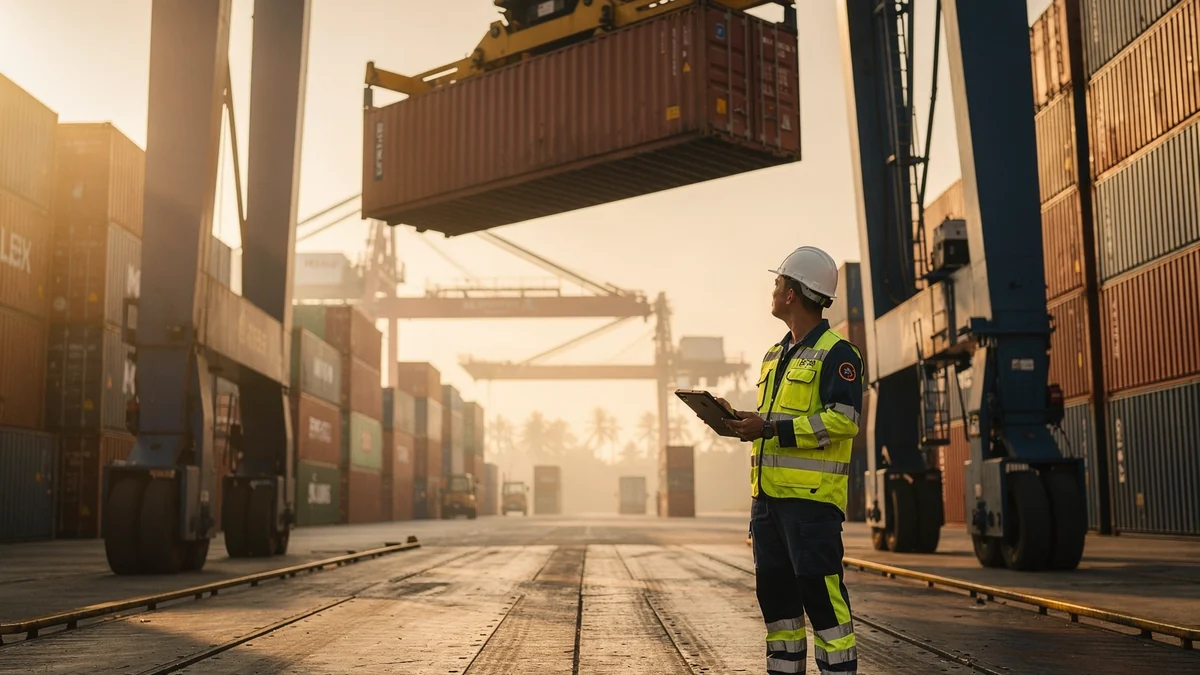
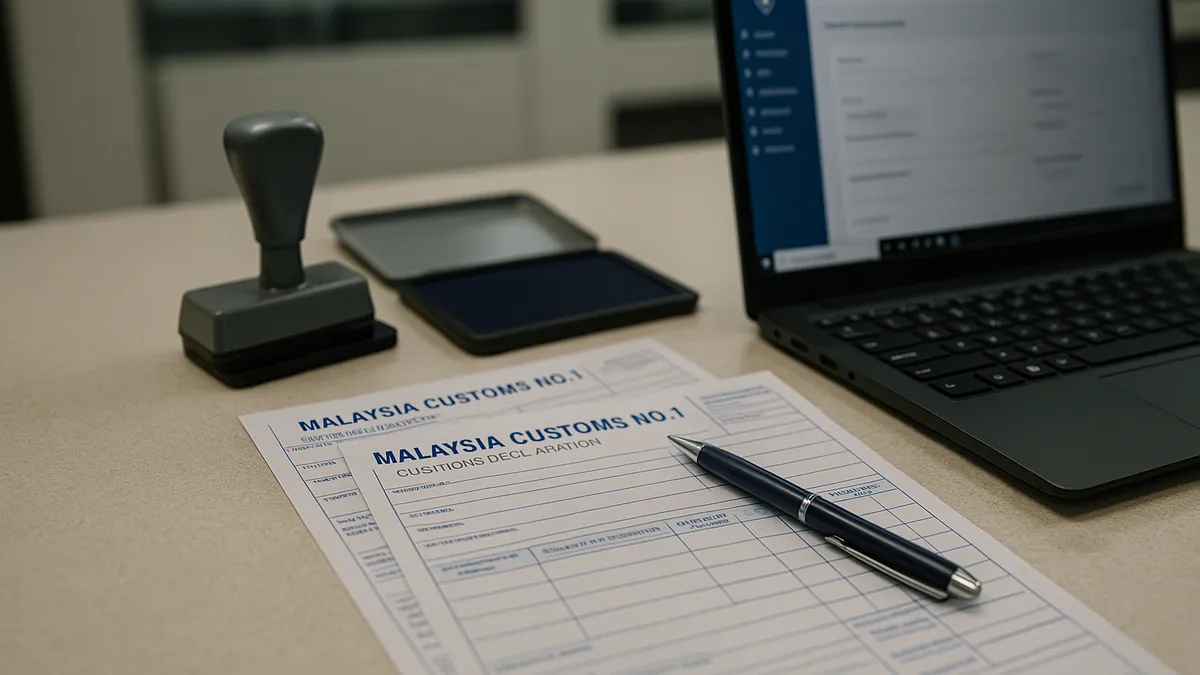
DNE Forwarding (M) Sdn Bhd handles exports from Malaysia: sea freight through Port Klang (Westport and Northport) and air freight through KLIA, for Malaysian manufacturers and traders. We book the vessel or the flight, file the K2 export declaration through SMK, submit the verified gross mass (VGM), prepare the certificate of origin paperwork your buyer needs and arrange the haulage from your factory to the port or KLIA. For an export quote, WhatsApp +6012 231 1393 or call +603 3324 2868.
DNE has managed export shipments through Port Klang since 1999 and moves over 1,000 containers a month across forwarding, customs clearance and haulage. Exports run through the same single point of contact as imports, and DNE files the K2 itself, so there is no handoff between two companies at the customs stage. DNE serves importers and exporters across manufacturing, FMCG, chemicals, electronics, automotive and furniture.
Why exporters use DNE
- One contact, factory to vessel. The booking, the K2, the VGM and the haulage run under our own coordination.
- Licensed and certified. JKDM-licensed customs agent, KA-licensed haulage, ISO 9001 quality system, FIATA and FMFF member.
- At Port Klang since 1999, moving over 1,000 containers a month with 99%+ documentation compliance.
What DNE handles on an export
How an export moves with DNE
1. Enquiry and quote
Send the destination, the cargo description, the volume and your Incoterm if you know it. You get an indicative rate in the first conversation and an itemised quotation the same business day.
2. Documents check
We check the commercial invoice, the packing list and the HS codes that will go on the K2. If your goods need a permit or licence, applying for it is between you and the issuing agency; we confirm it is in hand before we file. If your buyer wants a preferential duty rate, we confirm the certificate of origin form at this stage.
3. Booking
We book the vessel space for the container you need (20ft, 40ft, 40ft high cube or 45ft high cube, or LCL for smaller loads) and tell you whether it loads at Westport or Northport, which depends on the carrier’s berthing schedule. For time-sensitive cargo, book at least one to two weeks ahead.
4. Empty container, stuffing and VGM
For a full container (FCL), we arrange the empty container’s collection and its delivery to your factory or warehouse. After stuffing it is sealed, weighed over a certified weighbridge and returned to the port, and we file the VGM before the cut-off. Our own fleet covers Selangor and the Klang Valley; for Negeri Sembilan, Pahang, Johor, Penang and further north we coordinate with established haulage partners.
5. K2, loading and the bill of lading
We lodge the K2 through SMK and upload the supporting documents through MyCIEDS; the container cannot be loaded until the K2 is approved. If Customs selects it for inspection, it is examined at the port before loading. Once released it goes on the vessel, and the shipping line issues the bill of lading for you to send to your buyer, or to their bank under a letter of credit.
Air exports through KLIA run the same way with a flight in place of the vessel: we book space with the cargo airlines, prepare the shipping documents and file the K2 for the air cargo at KLIA through SMK. See air freight through KLIA.
The documents an export needs
| Document and what it does | Who provides it |
|---|---|
| Commercial invoice Value and description of the goods; the basis of the K2 | You |
| Packing list What is in each package, with weights | You |
| K2 export declaration The customs export declaration; no approved K2, no loading | DNE files it through SMK |
| Export permit or licence Only for controlled goods | You, from the issuing agency |
| Certificate of origin Lets your buyer claim a free trade agreement rate | MITI issues it through ePCO on myTRADELINK; DNE prepares the application documents |
| VGM declaration The packed container's verified weight; no VGM, no loading | DNE files it; you stay responsible for the weight |
| Bill of lading Contract of carriage and document of title | The shipping line, after loading |
What we see on exports: discrepancies between the commercial invoice, packing list, K2 and bill of lading, even minor ones like a difference in the number of decimal places on the weight, can trigger Customs queries. Use a single source of data for all documents to avoid transcription errors.
Exporting from a Free Trade Zone or under a Licensed Manufacturing Warehouse licence? Your procedure differs from a standard exporter’s: see bonded vs FTZ vs LMW and the ZB free zone forms.
Mistakes that hold an export at the port
After handling thousands of export shipments, we see the same mistakes cause delays and penalties again and again:
What does an export cost?
Every DNE quote is itemised, with the freight, port charges, haulage and documentation each on their own line, and if a rate changes mid-shipment we tell you before it hits your invoice. Our own fee is quoted against the scope of the job rather than off a rate card. What each line on a forwarder’s invoice means is set out in our guide to freight forwarder charges in Malaysia.
Exports are part of DNE’s freight forwarding service at Port Klang; see also sea freight from Port Klang, air freight through KLIA and our customs clearance agent service. The whole process, from registering with Customs to the bill of lading, is in our step-by-step guide to exporting from Malaysia.