DNE Forwarding (M) Sdn Bhd ships dangerous goods in all nine IMDG classes by sea through Port Klang, at Westport and Northport, for Malaysian importers and exporters. We check your Safety Data Sheet (SDS) and confirm the UN number, proper shipping name, class and packing group, prepare the DG paperwork, book a carrier that accepts your class, notify the terminal, file the customs declaration and haul the container on DG-rated trucks; permits stay with you or your supplier. For a quote, WhatsApp +6012 231 1393 or call +603 3324 2868.
DNE has handled dangerous goods through Port Klang for more than 25 years, from routine chemical exports to multi-class consignments; across forwarding, customs clearance and haulage it moves over 1,000 containers a month in all. Permits are the one part we leave to you: DNE does not obtain, process or advise on permits. If your goods need one, you or your supplier apply to the issuing agency, and we confirm it is in hand before we file.
Why use DNE for dangerous goods
- One team, no handoffs. The SDS check, the DG paperwork, the booking, the customs declaration and the truck sit with one Port Klang team.
- Licensed and certified. JKDM-licensed customs agent, KA-licensed haulage, ISO 9001 quality system, FIATA and FMFF member; every DG file is archived for the compliance trail.
- At Port Klang since 1999, moving over 1,000 containers a month with 99%+ documentation compliance.
What DNE handles on a dangerous goods shipment
What we see at Port Klang: chemicals don’t forgive paperwork mistakes. A misclassified HS code on a UN-numbered shipment can mean a 2-week port hold, MSDS rework, JKDM scrutiny and very real demurrage.
Which IMDG classes does DNE ship?
All nine. The class decides the packaging, the labels, the documents, the carrier’s surcharge and how much notice the port needs before the box arrives.
| Class and common examples | Notice to the port |
|---|---|
| Class 1 · Explosives Fireworks, flares, detonators | 5–7 working days |
| Class 2 · Gases Aerosols, compressed gases (LPG, nitrogen), fire extinguishers, ammonia (2.3) | 48–72 hours |
| Class 3 · Flammable liquids Paints, industrial solvents, adhesives, alcohols | 48–72 hours |
| Class 4 · Flammable solids Metal powders, sulphur, activated carbon | 48–72 hours |
| Class 5 · Oxidisers and organic peroxides Hydrogen peroxide, ammonium nitrate fertilisers, bleaching agents (5.1); organic peroxides (5.2) | 48–72 hours |
| Class 6 · Toxic and infectious substances Pesticides, herbicides | 48–72 hours |
| Class 7 · Radioactive material Industrial radiography sources, medical isotopes | 5–7 working days |
| Class 8 · Corrosives Sulphuric and hydrochloric acid, sodium hydroxide, cleaning chemicals | 48–72 hours |
| Class 9 · Miscellaneous Lithium batteries (UN3480, UN3481), dry ice, environmentally hazardous substances | 48–72 hours |
Class 1 runs under its own rules at Port Klang: no transhipment, daylight operations only, delivery and collection directly under the gantry crane with no storage in the port, and a fire brigade on standby at the berth. Class 7 needs an AELB licence. Both need approvals beyond Customs, which is why the port asks for more notice.
How a dangerous goods shipment moves with DNE
1. Send the SDS and the shipment details
WhatsApp or email the Safety Data Sheet (current, in English, all 16 sections), the commercial invoice and packing list, the volume and the origin or destination. You get an indicative rate in the first conversation and an itemised quotation the same business day; Class 1 and Class 7 surcharges are quoted individually.
2. Classification check
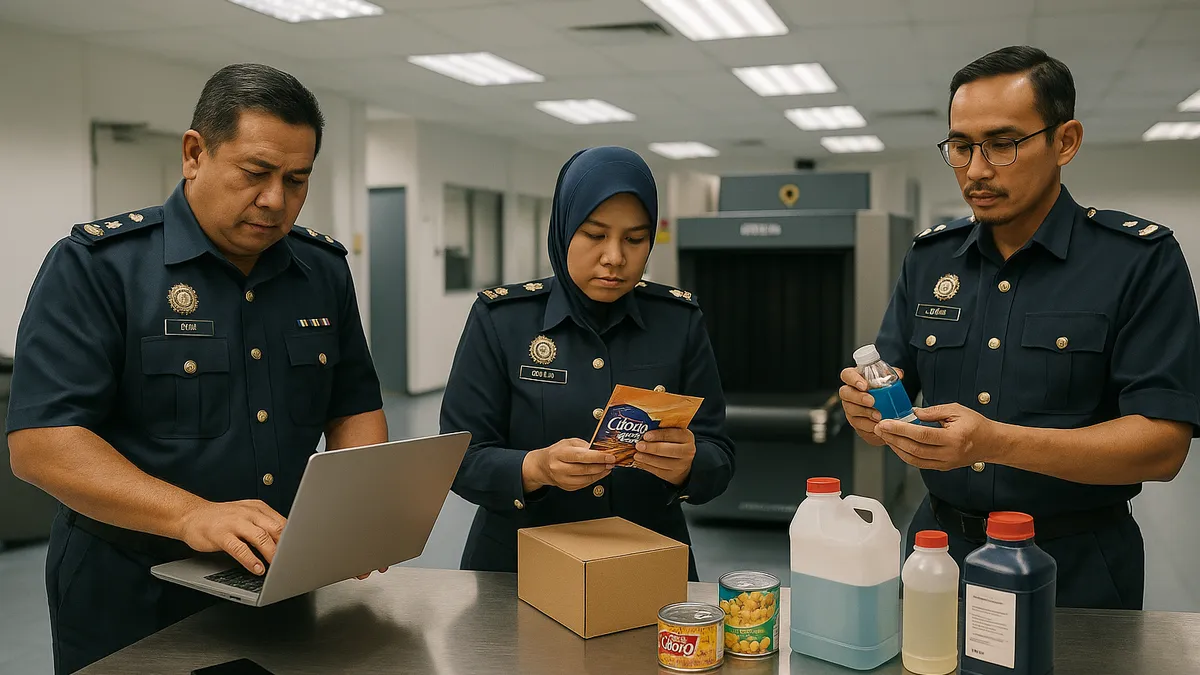
We verify the UN number, proper shipping name, class and packing group against the SDS, flag missing data such as a packing group or shipping name so the declaration does not go back for revision, and ask you to confirm that any agency permit your goods need is in hand before we file.
3. Booking, DG documents and port notice
We book with a carrier that accepts your class on your route, prepare the dangerous goods declaration and container packing certificate, and notify the terminal ahead of the box: 48 to 72 hours for most classes, 5 to 7 working days for Class 1 and Class 7.
4. Customs declaration
We file the K1 (import) or K2 (export) through SMK and lodge the supporting documents through MyCIEDS. With a complete MSDS and a clean HS classification, DG-class chemicals clear within 24 to 48 hours of the K1 being filed.
5. DG-rated haulage
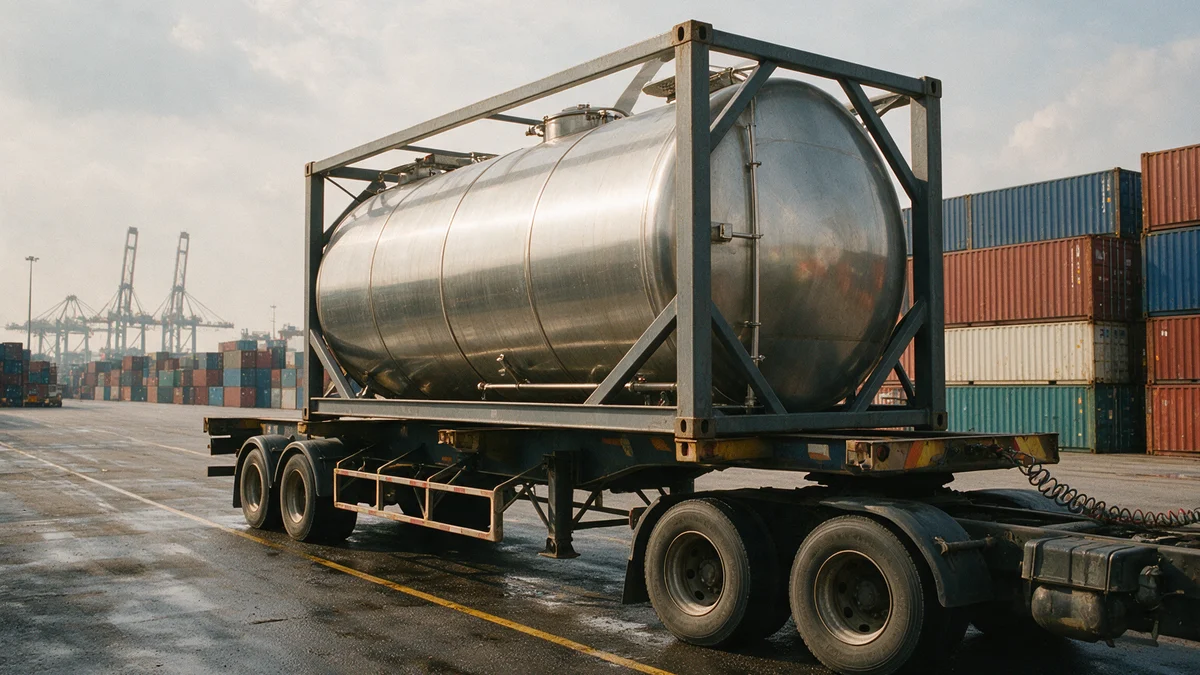
Our own fleet moves the container between Westport or Northport and your warehouse or plant in Selangor and the Klang Valley, with the right placards and spill response kits. For ISO tank imports we coordinate the cleaning, the return and the depot positioning.
Dangerous goods jobs we handle
What does shipping dangerous goods cost?
DNE quotes every DG shipment itemised: ocean freight, port charges, customs duty and SST, haulage and documentation, with disbursements such as DG fees shown separately. Our own fee is quoted against the scope of the job rather than off a rate card.
On top of the base freight, carriers charge a DG surcharge. Our guide to shipping dangerous goods through Port Klang (April 2026) gives typical ranges per container: USD 100 to 250 for Classes 2, 3, 8 and 9; USD 150 to 350 for Classes 4, 5 and 6; USD 300 to 500 or more for Class 1 and Class 7, quoted individually; and USD 100 to 500 for lithium batteries, depending on quantity and state of charge. These are the carriers’ own charges, not DNE’s fee. With UN-certified packaging, documentation and higher insurance premiums, budget 25 to 60% above standard freight.
Shipping DG as general cargo costs far more: carriers impose penalties of USD 15,000 to 45,000 per container, and a false declaration is an offence under section 133 of the Customs Act 1967, with a fine of up to RM500,000, up to seven years’ imprisonment, or both.
Dangerous goods shipping is part of DNE’s freight forwarding service at Port Klang, alongside sea freight and our customs clearance agent service. For the classes, documents and port rules in full, read the dangerous goods guide.