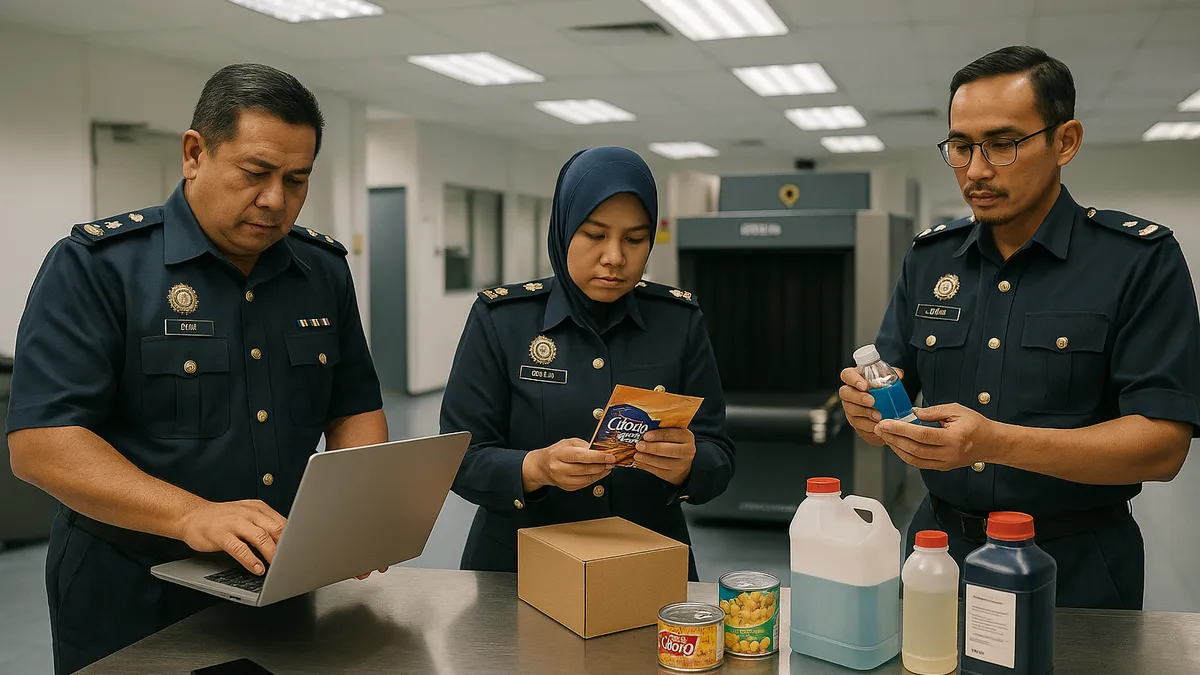
Every year, containers are seized at Port Klang because importers did not realise their goods were prohibited or failed to obtain the correct permit before shipment. The consequences are severe: goods confiscated, fines reaching hundreds of thousands of ringgit, and in the worst cases, criminal prosecution and imprisonment. Yet many businesses still operate without a clear understanding of what Malaysia bans outright, what requires a permit, and which agency issues that permit.
This guide breaks down the full landscape of prohibited and restricted imports in Malaysia under the Customs (Prohibition of Imports) Order 2023 and its subsequent amendments. Whether you are a first-time importer or a manufacturer sourcing raw materials, understanding these rules is not optional — it is a legal obligation that directly affects your supply chain.
Understanding the Three Categories: Prohibited, Restricted, and Controlled
Malaysian customs law, primarily the Customs Act 1967 (Act 235), classifies import restrictions into three distinct categories. Confusing them can be costly, so it is important to understand exactly what each means.
Absolutely Prohibited
These goods cannot be imported into Malaysia under any circumstances. No permit, licence, or exemption exists. They are listed in the First Schedule of the Customs (Prohibition of Imports) Order 2023. Attempting to import them is a criminal offence regardless of intent or ignorance.
Conditionally Prohibited (Restricted)
These goods can be imported, but only with the correct permit, licence, or approval from the relevant government agency. They are listed in the Second Schedule of the same Order. Importing them without the required documentation is treated the same as importing prohibited goods — seizure, fines, and potential prosecution.
Controlled Goods
Certain goods are subject to additional conditions beyond permits, such as mandatory compliance certifications, labelling requirements, quantity limits, or end-use restrictions. These are often governed by sector-specific legislation rather than the Customs Act alone.
Critical Distinction
- Prohibited = absolute ban, no exceptions, no permits available
- Restricted = allowed with the correct permit obtained BEFORE the goods arrive in Malaysia
- Controlled = allowed with special conditions (certification, labelling, end-use declarations)
Absolutely Prohibited Imports
The following goods are absolutely banned from importation into Malaysia. This list reflects the First Schedule of the Customs (Prohibition of Imports) Order 2023, including all amendments through April 2026.
Narcotics and Dangerous Drugs
All substances listed under the Dangerous Drugs Act 1952 are absolutely prohibited. This includes heroin, morphine, cocaine, methamphetamine, cannabis, and their derivatives. Malaysia's drug laws are among the strictest in the world — trafficking in dangerous drugs carries a mandatory death penalty under the Dangerous Drugs Act 1952, although recent legal reforms have given judges some sentencing discretion.
Drug precursors and certain chemicals used in illicit drug manufacturing are also prohibited or heavily restricted under the Poisons Act 1952 and the Dangerous Drugs (Special Preventive Measures) Act 1985.
Counterfeit Currency and Goods
Counterfeit currency of any denomination is absolutely prohibited. Additionally, goods bearing counterfeit trademarks or infringing intellectual property rights face enhanced border enforcement. Under Section 70B of the Trade Marks Act 2019, Customs officers are empowered to detain suspected counterfeit goods ex officio — meaning they can act without a complaint from the trademark owner.
Obscene and Objectionable Materials
Indecent or obscene printings, paintings, photographs, books, cards, lithographic or other engravings, films, videotapes, slides, and any other media are absolutely prohibited. This also includes any goods bearing the imprint or reproduction of Quranic verses in a manner deemed disrespectful.
Weapons and Defensive Equipment
Daggers, flick knives, and certain bladed weapons are absolutely prohibited. Imitation firearms and hand grenades are also banned outright. Defensive or protective clothing such as body armour is prohibited without exception for commercial imports.
Specific Flora and Fauna
Live piranha fish are absolutely prohibited. Turtle eggs from any species are banned. Certain fruits — specifically cocoa pods, rambutans, pulasans, longans, and nam nam fruit from the Philippines and Indonesia — are prohibited due to biosecurity concerns. Soil and live plant pests are also absolutely banned.
Hazardous Substances
Sodium arsenate and other highly toxic chemicals with no legitimate industrial application are absolutely prohibited. Products from countries under international sanctions may also fall under absolute prohibition depending on current UN Security Council resolutions.
Electronic Waste (New for 2026)
As of 1 April 2026, electronic waste (e-waste) has been reclassified from conditionally prohibited to absolutely prohibited under the Customs (Prohibition on Imports) Order (Amendment) (No. 3) 2026 (P.U.(A) 151/2026). Previously, the Department of Environment (DOE) had discretionary power to grant exemptions for certain e-waste imports. That pathway has been permanently removed. All scheduled waste containing electronic components is now banned without exception.
Restricted Imports: What Needs a Permit
The Second Schedule of the Customs (Prohibition of Imports) Order 2023 lists goods that may be imported only with the appropriate import permit or licence. Each category of restricted goods falls under a specific Permit Issuing Agency (PIA). Getting the wrong permit — or applying to the wrong agency — is as bad as having no permit at all.
Firearms, Ammunition, and Explosives
Permit Issuing Agency: Royal Malaysia Police (PDRM), under the Arms Act 1960
All firearms, ammunition, explosives, and related components require a police permit. This includes sporting firearms, commercial explosives for mining or construction, and pyrotechnic devices. The application process involves background checks, end-use declarations, and secure storage verification.
Radioactive Materials and Nuclear Substances
Permit Issuing Agency: Atom Malaysia (formerly AELB), under the Atomic Energy Licensing Act 1984 (Act 304)
Any material that is radioactive, nuclear, or constitutes a prescribed substance requires a licence from Atom Malaysia. This covers industrial radiography sources, medical isotopes, smoke detectors containing americium-241, and research materials. Import permits are issued per consignment and require proof of proper handling, transport, and storage capabilities.
Pharmaceutical Products and Controlled Medicines
Permit Issuing Agency: National Pharmaceutical Regulatory Agency (NPRA), under the Control of Drugs and Cosmetics Regulations 1984
All pharmaceutical products must be registered with the Drug Control Authority (DCA) before they can be imported. The importer must hold a valid Import Licence issued by the Director of Pharmaceutical Services. Products containing scheduled poisons under the Poisons Act 1952 face additional controls. Cosmetic products are also regulated under the same framework and require NPRA notification before import.
Food Products, Meat, and Agricultural Goods
Permit Issuing Agencies: MAQIS (Malaysian Quarantine and Inspection Services), DVS (Department of Veterinary Services), JAKIM (Department of Islamic Development Malaysia)
Food imports require permits from MAQIS under the Malaysian Quarantine and Inspection Services Act 2011. All animal products and their derivatives — including meat, poultry, dairy, and eggs — must carry halal certification recognised by JAKIM. The exporting country, processing facility, and commodity must be registered with DVS before MAQIS will process a permit application. Plant-based food products require phytosanitary certificates from the exporting country.
Vehicles and Heavy Machinery
Permit Issuing Agency: Ministry of Investment, Trade and Industry (MITI)
Motor vehicles require an Approved Permit (AP) from MITI. There are several AP categories: Open AP (for specific licence holders), Franchise AP (for authorised vehicle distributors), and other vehicle APs for special categories. Heavy machinery under HS codes 8426, 8701, 8704, and 8705 also requires MITI approval. Applications are made through the ePermit system, except for APs subject to pre-approval processes.
Iron, Steel, and Metal Products
Permit Issuing Agency: MITI
Flat-rolled iron and steel products under specific HS code subheadings (7208, 7209, 7210, 7211, 7212, 7225, 7227) and steel tubes and pipes (7303-7306) require import permits from MITI. The 2024 amendment to the Customs (Prohibition of Imports) Order added 21 additional metal scrap items to the restricted list, reflecting Malaysia's tightening controls on metal waste imports.
Timber and Timber Products
Permit Issuing Agency: Malaysian Timber Industry Board (MTIB)
Imported timber must comply with the Malaysian Timber Legality Assurance System (MYTLAS), which requires documentation proving the timber was legally harvested. Stricter documentation requirements were introduced in 2025, including chain-of-custody certificates and origin verification for tropical hardwoods.
Pesticides and Agricultural Chemicals
Permit Issuing Agency: Pesticides Board, under the Pesticides Act 1974
All pesticides must be registered with the Pesticides Board before importation. Registration requires toxicological data, efficacy studies, and environmental impact assessments. Unregistered pesticides cannot be imported under any circumstances, even for trial or research purposes, without specific Board approval.
Chemicals and Hazardous Substances
Permit Issuing Agencies: Department of Environment (DOE), Department of Occupational Safety and Health (DOSH)
Chemicals listed under the Chemical Weapons Convention, the Rotterdam Convention (Prior Informed Consent), and the Stockholm Convention (Persistent Organic Pollutants) require permits from DOE. Malaysia updated its restricted chemical list in 2025 to include additional substances under these international treaty obligations. Importers must provide Safety Data Sheets (SDS) and end-use declarations for all restricted chemicals.
Environmental Restrictions
Malaysia has significantly expanded its environmental import restrictions in recent years. These affect a wide range of industries, from electronics manufacturing to construction.
E-Waste: From Restricted to Absolutely Banned
The most significant environmental change is the absolute ban on e-waste imports effective 1 April 2026. Previously, e-waste was conditionally restricted — the DOE Director General could grant exemptions for imports meeting specific conditions. The new classification under P.U.(A) 151/2026 eliminates all exemptions.
This affects businesses that previously imported non-functional electronics for refurbishment, precious metal recovery, or component recycling. If your supply chain involves importing any electronic equipment that could be classified as waste — including mixed shipments where some items are non-functional — you must restructure your sourcing immediately.
Basel Convention Scheduled Waste
Malaysia has been a party to the Basel Convention since 1993. As of January 2025, both hazardous and non-hazardous e-waste and scrap are subject to Basel Convention prior informed consent (PIC) requirements. Exporting countries must obtain Malaysia's written agreement before shipping scheduled waste. The DOE is the competent authority for Basel Convention implementation in Malaysia.
Plastic Waste Restrictions
Aligned with Malaysia's Roadmap Towards Zero Single-Use Plastics 2018-2030, restrictions on importing certain single-use plastic products have been progressively tightened. Plastic waste imports require DOE permits and are subject to strict quality and contamination thresholds. Malaysia has signalled its intention to further reduce plastic waste imports as domestic recycling capacity develops.
Ozone-Depleting Substances
Under Malaysia's commitments to the Montreal Protocol, hydrochlorofluorocarbons (HCFCs) and other ozone-depleting substances are subject to import quotas managed by DOE. Malaysia is on track to phase out HCFCs entirely, with import quotas reduced annually. Businesses using refrigerants or industrial solvents containing restricted substances should plan their transition to alternatives.
Safety Standards and Mandatory Certification
Beyond permits, certain product categories require mandatory certification before they can clear customs.
SIRIM Certification for Electrical and Electronic Products
Under the Electrical Supply Act 1990 and Electricity Regulations 1994, all electrical and electronic products sold in Malaysia must carry a Certificate of Approval (COA) from SIRIM QAS International and display the ST-SIRIM label directly on the product (not just the packaging, as of February 2022). This is a mandatory requirement enforced at the border — goods without valid SIRIM certification will be held by Customs.
Recent 2025 updates to SIRIM requirements include:
- RoHS 2.0 compliance (effective March 2025): All electrical and electronic imports must meet restricted substance controls for lead, mercury, cadmium, and flame retardants
- Battery certification (September 2025): Lithium-ion batteries, including energy storage systems, e-scooter and e-bike batteries, EV batteries, and portable batteries, must obtain SIRIM certification before entry
- IPv6 compliance (July 2025): All communication equipment must pass full IPv6 protocol stack testing
SIRIM certification typically takes 8 to 12 weeks and must be held by a locally registered Malaysian company. Plan your product launches and supply chains accordingly.
CIDB Certification for Construction Materials
Construction materials and building products are regulated by the Construction Industry Development Board (CIDB) under the Construction Industry Development Board Act 1994. Certain construction materials require CIDB approval and must meet Malaysian Standards (MS) before they can be imported and used in Malaysian construction projects.
How to Check If Your Product Is Restricted
Before shipping anything to Malaysia, verify its import status using these methods:
Step 1: Use the JKDM HS Explorer
The Royal Malaysian Customs Department provides an online tariff lookup tool at ezhs.customs.gov.my. Search for your product by description or HS code. The critical column to check is the "Regulation" column — this indicates whether the item falls under the First Schedule (absolutely prohibited) or Second Schedule (conditionally prohibited/restricted) of the Customs (Prohibition of Imports) Order 2023.
Step 2: Identify the Permit Issuing Agency
If the Regulation column shows your product is restricted, the HS Explorer will indicate which government agency issues the required permit. Cross-reference this with the agency's own guidelines, as permit requirements and application processes change frequently.
Step 3: Consult Your Forwarding Agent
The HS Explorer is a starting point, not the final answer. HS code classification can be complex, and a single digit difference in classification can mean the difference between unrestricted import and absolute prohibition. Your customs clearance agent should verify the classification and confirm permit requirements before you commit to a purchase order.
Quick Reference: Key Permit Issuing Agencies
- MITI — Vehicles, iron/steel, heavy machinery, certain consumer goods
- MAQIS — Food, plants, animals, agricultural products
- NPRA — Pharmaceuticals, cosmetics, medical devices
- DOE — Chemicals, scheduled waste, ozone-depleting substances
- Atom Malaysia — Radioactive and nuclear materials
- PDRM — Firearms, ammunition, explosives
- SIRIM — Electrical/electronic product certification
- MTIB — Timber and timber products
- Pesticides Board — Pesticides and agricultural chemicals
- JAKIM/DVS — Halal certification for animal products
Consequences of Non-Compliance
Importing prohibited or restricted goods without proper permits carries severe penalties under the Customs Act 1967 and related legislation.
Seizure and Forfeiture
Goods imported in violation of import prohibitions will be seized immediately by Customs. Under Section 126 of the Customs Act 1967, seized goods are forfeited to the Government and disposed of as the Director General of Customs directs. You will not get your goods back, and you will not be compensated.
Financial Penalties
Fines for importing prohibited goods range from RM100,000 to RM500,000 depending on the nature of the goods and the offence. For dangerous goods violations and environmental offences under the Environmental Quality Act 1974, fines can be even higher. Repeated offences attract escalating penalties.
Imprisonment
Serious offences carry prison terms of up to 7 years under the Customs Act. For drug trafficking, the penalty is mandatory death or life imprisonment. For violations under the Strategic Trade Act 2010 (which covers dual-use goods and weapons of mass destruction-related materials), imprisonment can range from 2 years to life, with fines up to RM30 million.
Blacklisting
Companies found to have violated import prohibitions may be blacklisted by JKDM, meaning all future shipments will be subject to mandatory physical inspection — dramatically increasing clearance times and costs. Blacklisted importers may also be barred from using simplified customs procedures and pre-clearance facilities.
Ignorance of the law is not a defence. If your goods are seized at the port because you did not obtain the correct permit, the burden is on you to prove compliance — not on Customs to prove intent.
Recent Regulatory Changes (2025-2026)
The regulatory landscape has shifted significantly over the past 18 months. Here are the changes most relevant to commercial importers.
- April 2026: Absolute ban on e-waste imports under P.U.(A) 151/2026 — no more DOE exemptions
- 2024 amendment: 21 additional metal scrap items added to the restricted import list under MITI control
- September 2025: SIRIM mandatory certification expanded to cover lithium-ion batteries and battery energy storage products
- March 2025: RoHS 2.0 enforcement begins for all electrical and electronic imports
- January 2025: Basel Convention requirements tightened for both hazardous and non-hazardous e-waste and scrap
- 2025: Enhanced border enforcement for counterfeit goods — Customs officers empowered to detain suspected IP-infringing goods without complaint from trademark holders
- 2025: Stricter timber documentation requirements under MYTLAS, including chain-of-custody certificates
- 2025: Additional chemicals added to restricted list under Chemical Weapons Convention and Rotterdam Convention obligations
The Role of Your Forwarding Agent in Compliance Screening
Your forwarding agent is your first line of defence against importing prohibited or restricted goods. A competent freight forwarding company does not simply process paperwork — it actively screens your shipments for compliance risks before goods leave the origin country.
Pre-Shipment Checks
Before your supplier loads the container, your forwarding agent should review the commercial invoice and packing list against the current Customs (Prohibition of Imports) Order. This pre-shipment screening catches problems when they are cheap to fix — before freight, port charges, and demurrage start accumulating.
HS Code Verification
Incorrect HS code classification is one of the most common causes of shipment delays and penalties. Your forwarding agent should verify that the HS codes declared by your supplier match the actual goods and check whether those codes trigger any permit requirements.
Permit Verification
For restricted goods, your forwarding agent should confirm that all required import permits are in place, valid, and match the specific goods being shipped — including the correct HS codes, quantities, and origin country stated on the permit.
Regulatory Updates
The best forwarding agents monitor JKDM circulars, gazette orders, and agency announcements proactively. When a new amendment to the Customs (Prohibition of Imports) Order is gazetted, your forwarding agent should alert you if it affects your product lines — not the other way around.
How DNE Forwarding Helps
At DNE Forwarding, we have been handling customs clearance at Port Klang for over 25 years. Compliance screening is built into every shipment we process — not treated as an afterthought.
- Pre-shipment compliance screening: We review your product descriptions and HS codes against the current prohibited and restricted goods lists before your cargo ships. If a permit is needed, we flag it immediately.
- Permit coordination: We guide you through the permit application process for the correct agency — whether it is MITI, MAQIS, DOE, NPRA, or any other PIA. We help prepare documentation and track application status so permits are in hand before cargo arrives.
- HS code classification support: Our licensed customs agents review every declaration to ensure accurate classification, reducing the risk of seizure or penalties due to misclassification.
- Regulatory monitoring: We track all amendments to the Customs (Prohibition of Imports) Order and related legislation. When changes affect your trade, we notify you proactively.
- End-to-end logistics: From freight forwarding and customs clearance to haulage and warehousing, we manage the entire supply chain under one roof — ensuring compliance is maintained at every stage.
Importing restricted goods without the right permits is one of the most expensive mistakes a business can make. The cost of getting it right — proper classification, timely permit applications, pre-shipment screening — is a fraction of the cost of getting it wrong.