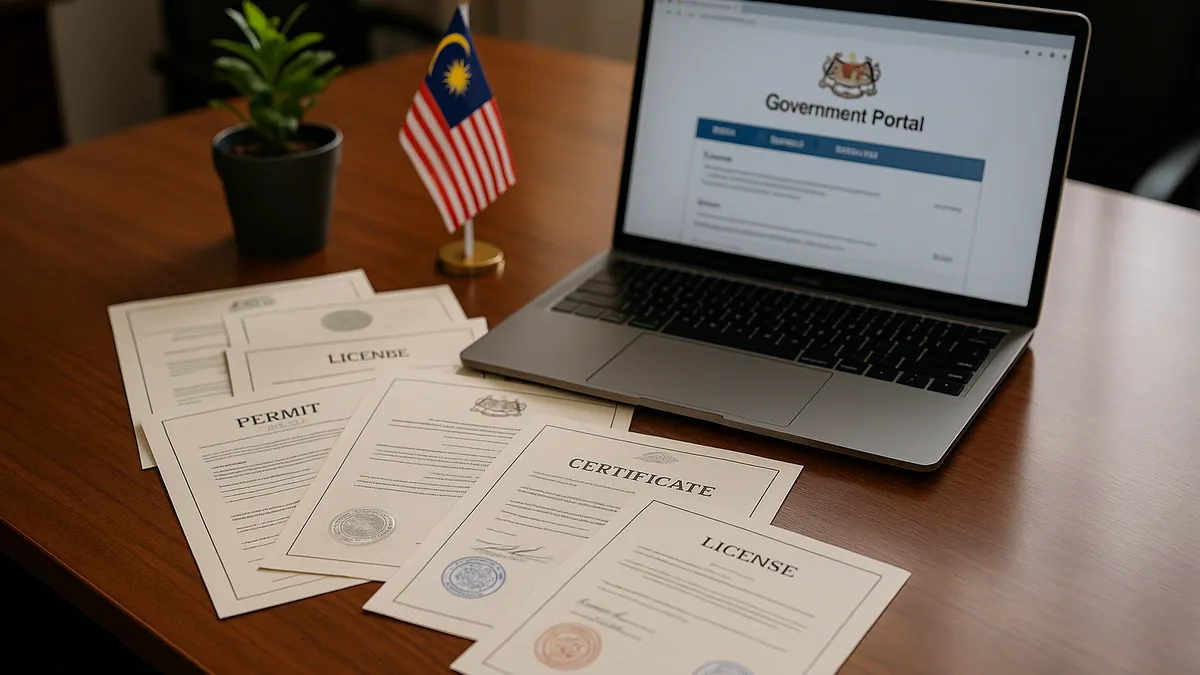
Not every product imported into Malaysia requires a permit. Standard manufactured goods, general merchandise, and many raw materials clear customs with nothing more than a properly classified HS code, a commercial invoice, and a packing list. But a significant number of product categories do require import permits, licences, or certifications from various government agencies — and failing to obtain the correct documentation before your cargo arrives can result in goods being detained at port, costly storage charges, penalties, and in some cases seizure and destruction of the shipment.
The challenge for importers is that Malaysia's permit landscape is spread across multiple agencies, each with its own application process, processing timeline, and documentary requirements. This guide walks through the major permit-issuing agencies, the product categories they regulate, and the practical steps you need to take to ensure your cargo clears without delay.
Key Agencies Covered in This Guide
- MITI — Approved Permits (AP) for vehicles, iron & steel, heavy machinery, chemicals
- SIRIM — Mandatory certification for electrical and electronic products
- MAQIS — Quarantine and inspection for food, plants, animals, soil
- JAKIM — Halal certification for meat and animal-based food products
- NPRA — Registration for pharmaceuticals, medical devices, cosmetics
- AELB — Licensing for radioactive materials and irradiating apparatus
- DOE — Permits for scheduled waste and hazardous materials
MITI Approved Permits (AP)
The Ministry of Investment, Trade and Industry (MITI) issues Approved Permits (APs) for the import and export of controlled goods. An AP is essentially a licence that grants the holder permission to bring specific categories of goods into Malaysia. Without the correct AP, your goods will be held at the port — and no amount of negotiation with customs will release them.
Categories of Goods Requiring MITI AP
MITI currently administers APs for several major product categories:
- Motor vehicles: All completely built-up (CBU) and completely knocked-down (CKD) motor vehicles and motorcycles require an AP. This includes passenger vehicles, commercial vehicles, and specialty vehicles. MITI issues several sub-categories: Open AP, Franchise AP, Individual AP, and Other Vehicle AP — each with different eligibility criteria and conditions.
- Iron and steel products: Flat-rolled products of iron or non-alloy steel (HS headings 7208-7212), stainless steel products (HS headings 7218, 7221-7222, 7224-7225), and certain tubes and pipes (HS 7306, 7614) require an AP for import. This measure protects the domestic steel industry.
- Heavy machinery: Cranes and lifting equipment (HS 8426), road tractors (HS 8701), motor vehicles for goods transport (HS 8704), and special-purpose vehicles (HS 8705) are controlled under MITI's heavy machinery AP.
- Chemical Weapons Convention (CWC) chemicals: Toxic chemicals and their precursors listed under the CWC require an AP from MITI. These include Schedule 1, 2, and 3 chemicals as defined by the convention.
Beyond MITI, other agencies issue import permits for their respective controlled goods. Rice imports are controlled under the Control of Paddy and Rice Act 1994, with permits issued by the Ministry of Agriculture and Food Security (KPKM). Sugar imports require permits from KPDN (Ministry of Domestic Trade and Cost of Living). Timber products are regulated through MAQIS under phytosanitary requirements.
How to Apply for a MITI AP
MITI AP applications are submitted through the ePermit system, accessible via MITI's official portal. The process involves:
- Company registration: Your company must be registered with MITI and have an active ePermit account. Only Malaysian-registered companies (Sdn Bhd or enterprise) can apply.
- Supporting documents: Depending on the AP category, you will need to submit commercial invoices, letters of credit or proof of purchase, company registration documents (SSM), and product specifications including HS codes.
- Processing time: Online applications are processed within 5 working days of receiving a complete application. Manual applications take approximately 7 working days. However, applications subject to pre-approval (Open AP, Franchise AP, Other Vehicle AP) take longer as they require committee review.
- Validity: A standard MITI AP is valid for 6 months from the date of issuance. Ensure your cargo arrives within this window — an expired AP is as good as no AP at all.
Important: Some AP categories, particularly for motor vehicles, require pre-approval before you can even submit an application through ePermit. Check with MITI or your forwarding agent early in the process to determine which pathway applies to your goods.
SIRIM Certification for Electrical and Electronic Products
If you are importing electrical or electronic products into Malaysia, SIRIM certification is almost certainly mandatory. Under the Electricity Supply Act 1990 and the Electrical Equipment (Safety Standards) Regulations, all regulated electrical equipment sold in Malaysia must carry a Certificate of Approval (CoA) and display the SIRIM certification label.
Products Requiring SIRIM Certification
The Energy Commission (Suruhanjaya Tenaga, or ST) maintains the list of regulated electrical equipment, which includes more than 30 product categories:
- Plugs, socket outlets, and adaptors
- Switches, dimmers, and lampholders
- Fluorescent lamps and LED lighting products
- Household appliances (fans, rice cookers, irons, kettles, air conditioners)
- Power tools and industrial electrical equipment
- Cables and wiring accessories
- Information technology equipment (computers, monitors, printers)
- Audio and video equipment
- Battery chargers and power banks
- Telecommunications equipment
The Certification Process
SIRIM certification is managed by SIRIM QAS International. The process typically involves:
- Application submission: The applicant should ideally be a Malaysian-registered entity. Foreign manufacturers usually appoint a local representative to manage the application.
- Product testing: Products are tested against the applicable Malaysian Standards (MS) or equivalent IEC/international standards. SIRIM accepts test reports from internationally accredited laboratories (ISO/IEC 17025) recognised under the ILAC Mutual Recognition Arrangement.
- Factory inspection: For first-time applicants, SIRIM may conduct a factory audit to verify quality management systems and production consistency.
- Certificate issuance: Upon successful testing and evaluation, SIRIM issues the CoA and authorises the applicant to affix the SIRIM label on compliant products.
The entire process can take 4 to 12 weeks depending on the product complexity, testing backlog, and whether re-testing is required. Plan accordingly — electrical goods arriving at port without valid SIRIM certification will be detained by customs until the importer produces proof of compliance or re-exports the goods.
MAQIS: Quarantine and Inspection for Food, Plants, and Animals
The Department of Malaysian Quarantine and Inspection Services (MAQIS) is the competent authority under the Malaysian Quarantine and Inspection Services Act 2011 (Act 728). MAQIS controls the importation of anything biological — food, live animals, plants, soil, microorganisms, and agricultural products — into Peninsular Malaysia and the Federal Territory of Labuan.
What Requires a MAQIS Import Permit
- Live animals: All live animals require a MAQIS import permit and a Veterinary Health Certificate from the exporting country's competent authority. Imported animals are subject to mandatory quarantine — for example, imported birds must undergo a quarantine period of not less than 7 days.
- Animal products: Meat, poultry, dairy, eggs, and processed animal products require a MAQIS import permit plus a Veterinary Health Certificate. Non-pork animal products additionally require a Halal Certificate from a JAKIM-recognised halal certification body.
- Plants and plant products: Regulated under the Agricultural Pests and Noxious Plants (Import/Export) Regulations, these require a MAQIS import permit and a Phytosanitary Certificate from the exporting country. This covers fruits, vegetables, seeds, timber, and ornamental plants.
- Soil and growing media: Importation of soil is tightly controlled to prevent the introduction of pests and pathogens.
- Fish and fishery products: Subject to import permits and health certification requirements.
- Microorganisms and biological agents: Controlled under biosecurity regulations.
How to Apply
MAQIS import permit applications are submitted through the E-Permit online system. You will need to provide details of the product, its origin, the exporting facility, and the relevant health or phytosanitary certificates. Processing times vary by product category, but importers should allow a minimum of 5 to 10 working days for standard applications. Complex applications — particularly for live animals or new product sources — may take longer as they require risk assessment by MAQIS technical officers.
MAQIS Inspection at Port
- MAQIS officers are stationed at all major entry points including Port Klang
- Physical inspection rates are high for first-time importers and new product sources
- Non-compliant shipments may be ordered for treatment, re-exported, or destroyed at the importer's cost
- Ensure all certificates are original documents (not copies) and match the shipment details exactly
JAKIM Halal Certification for Food Imports
Malaysia's halal requirements are among the most rigorous in the world. The Department of Islamic Development Malaysia (JAKIM) oversees halal certification, and its requirements directly affect food importers.
When Is Halal Certification Required?
Halal certification is mandatory for the importation of:
- All meat and poultry products (chicken, beef, mutton, turkey, duck)
- Processed foods containing animal-derived ingredients
- Gelatine and gelatine-based products
The halal certificate must be issued by a halal certification body recognised by JAKIM. Not all foreign halal certifiers are accepted — JAKIM maintains a list of recognised foreign halal certification bodies, and certificates from unrecognised bodies will be rejected. Products must comply with the Malaysian Standard MS 1500:2019 on halal food production, preparation, handling, and storage.
For non-meat food products, halal certification is not strictly mandatory for import clearance, but products making halal claims on their labelling must hold valid halal certification. Mislabelling carries penalties under the Trade Descriptions Act 2011.
Documentation for Halal Food Imports
At a minimum, halal food imports require:
- Valid Halal Certificate from a JAKIM-recognised certification body
- MAQIS import permit (for all food and animal products)
- Veterinary Health Certificate (for animal products)
- Health Certificate from the exporting country's food safety authority
AELB: Radioactive Materials and Irradiating Apparatus
The Department of Atomic Energy Malaysia (formerly the Atomic Energy Licensing Board, or AELB) regulates the import and export of all radioactive materials and irradiating apparatus under the Atomic Energy Licensing Act 1984 (Act 304) and the Radiation Protection (Licensing) Regulations 1986.
This applies to a broader range of goods than most importers realise. Beyond obvious items like industrial radiography sources and medical isotopes, it also covers:
- Smoke detectors containing americium-241
- Industrial gauging equipment with sealed radioactive sources
- Calibration sources for scientific instruments
- Certain ceramic and glass products containing naturally occurring radioactive materials (NORM)
Applications are submitted through AELB's e-SPP (Licensing and Enforcement System). The applicant must hold a valid licence from AELB to possess and use radioactive materials. Supporting documents include a Certificate of Compliance for packaging of radioactive material for transportation, and a Certified Approval Letter from the origin country's regulatory authority. The permit fee is RM20 per application, though the licensing and compliance costs are substantially higher.
NPRA: Pharmaceutical and Medical Product Imports
The National Pharmaceutical Regulatory Agency (NPRA) under the Ministry of Health controls the importation of pharmaceutical products, traditional medicines, health supplements, cosmetics, and medical devices.
Key Requirements
- Product registration: All pharmaceutical products must be registered with NPRA before they can be imported and sold in Malaysia. Registration requires submission of a comprehensive dossier including stability data (conducted at 30 degrees Celsius and 75% relative humidity to match Malaysia's climatic zone IVB), manufacturing information, and clinical data.
- Import licence: Companies importing registered pharmaceutical products must hold a valid Import Licence issued by NPRA. The processing fee is RM500, and complete applications are typically approved within 4 working days.
- Local representative: Foreign manufacturers must appoint a Malaysian-registered company as the local representative and registration holder. This company is legally responsible for all matters relating to the product's registration.
- Good Distribution Practice (GDP): Importers must comply with GDP guidelines, including proper storage conditions, temperature-controlled transport, and full traceability.
- Labelling: All labels and package inserts must comply with NPRA guidelines and include both Bahasa Malaysia and English text where required.
Product registration with NPRA is valid for 5 years and is subject to renewal. Post-marketing surveillance requirements include adverse event reporting and compliance with recall procedures.
DOE: Scheduled Waste and Hazardous Materials
The Department of Environment (DOE) controls the transboundary movement of scheduled (hazardous) waste under the Environmental Quality Act 1974 and Malaysia's obligations under the Basel Convention. If you are importing materials that could be classified as scheduled waste — including certain chemicals, e-waste, and industrial residues — you must obtain prior written approval from the DOE.
Critical Rules for Scheduled Waste Imports
- Recovery only: Malaysia only permits the import of scheduled waste for the purpose of recovery or reuse. Importation of hazardous waste for final disposal is completely prohibited.
- Licensed facility: The importer must operate a DOE-licensed recovery facility capable of processing the waste in an environmentally sound manner.
- Prior informed consent: Written approval from DOE must be obtained before the shipment leaves the exporting country. This is non-negotiable under the Basel Convention.
- Bank guarantee: A refundable bank guarantee of RM10,000 must be deposited with DOE for each scheduled waste shipment. The guarantee is returned upon completion of the transboundary movement, provided all conditions are met.
- OECD Ban Amendment: Malaysia does not permit importation of hazardous waste from OECD member countries, the European Commission, or Liechtenstein under the Basel Ban Amendment.
Violations of scheduled waste import regulations carry severe penalties, including fines of up to RM500,000 and potential criminal prosecution. Goods shipped without proper DOE approval will be refused entry and must be re-exported at the importer's expense.
How to Check If Your Product Needs a Permit
The single most useful tool for Malaysian importers is the JKDM HS Explorer, available at the Royal Malaysian Customs Department's portal. Here is how to use it to determine your permit obligations:
- Identify your HS code: Search for your product using keywords or browse the tariff chapters. Ensure you have the correct 8-digit or 10-digit Malaysian tariff code. (Read our comprehensive guide to HS codes for detailed instructions.)
- Check the Regulation column: Once you have located your HS code, look at the "Regulation" or "Import Regulation" column. This column indicates whether the product is subject to any import controls, and which agency issues the required permit.
- Understand permit codes: Common codes you will see include AP (Approved Permit from MITI), MAQIS (quarantine permit), SIRIM (certification required), DOE (environmental permit), and NPRA (pharmaceutical registration). Some products may show multiple permit requirements from different agencies.
- Verify with the issuing agency: The HS Explorer provides a starting point, but always confirm requirements directly with the relevant agency. Regulations change, and the online database may not always reflect the most recent amendments.
Pro Tip: Use MyTradeLink
- The MyTradeLink portal (mytradelink.gov.my) is another government resource that consolidates information on all Other Government Agency (OGA) permit requirements by HS code
- It links directly to each agency's application portal, saving time when you need to apply for multiple permits
- Your forwarding agent can cross-reference both JKDM HS Explorer and MyTradeLink to ensure nothing is missed
Common Mistakes That Get Goods Stuck at Port
In our 25 years of handling customs clearance at Port Klang, we have seen the same permit-related mistakes repeated over and over. Here are the most frequent — and most costly — errors:
1. Importing Without the Required AP
This is the most common and most painful mistake. An importer ships iron and steel products or a vehicle without first obtaining the MITI AP. The cargo arrives at port, customs flags it as a controlled item, and the goods sit in the port warehouse while the importer scrambles to apply for a permit. Meanwhile, storage charges accumulate daily, and the AP application itself takes 5 to 7 working days — assuming no issues with the paperwork. We have seen cases where goods were stuck for 3 to 6 weeks because of a missing AP.
2. Applying Too Late
Even importers who know they need a permit often underestimate processing times. SIRIM certification can take 4 to 12 weeks. NPRA product registration can take months. Even a straightforward MITI AP needs at least a week. If your application is not submitted well before your cargo ships, you are gambling on timing — and port storage charges do not pause while agencies process your paperwork.
3. Wrong AP Category or HS Code Mismatch
An AP is tied to specific HS codes and product descriptions. If there is a mismatch between your AP and the actual goods — for example, your AP covers flat-rolled steel under HS 7208 but your shipment contains stainless steel bars under HS 7222 — customs will reject the declaration. You will then need to apply for a new AP with the correct details, losing another week or more. Accurate HS code classification is essential.
4. Expired Permits
A MITI AP is valid for 6 months. MAQIS permits have defined validity periods. SIRIM certificates must be renewed. Importers who set up permits once and then forget about renewal dates find their next shipment blocked. Maintain a tracking calendar for all permit expiry dates.
5. Missing or Invalid Supporting Certificates
MAQIS requires original Phytosanitary Certificates and Veterinary Health Certificates. Copies, expired certificates, or certificates that do not match the shipment details (wrong origin country, wrong product description, wrong quantity) will result in rejection. For halal imports, a certificate from a non-JAKIM-recognised body is worthless at the Malaysian border.
6. Underestimating Multi-Agency Requirements
Some products require permits from multiple agencies simultaneously. A processed food product might need a MAQIS import permit, a JAKIM halal certificate, and an NPRA notification. Missing any one of these will hold up the entire shipment. Map out all applicable requirements before the cargo ships.
Timeline Planning: How Far in Advance to Apply
Different permits require different lead times. Use this as a planning guide:
Recommended Lead Times for Permit Applications
- MITI AP (standard): 2 to 3 weeks before cargo arrival (5 to 7 working days processing + buffer)
- MITI AP (pre-approval required): 6 to 8 weeks before cargo arrival
- SIRIM certification (new product): 3 to 4 months before first shipment
- SIRIM certification (renewal): 4 to 6 weeks before expiry
- MAQIS import permit: 2 to 3 weeks before cargo arrival
- JAKIM halal (foreign certifier recognition): Confirm JAKIM recognition status at least 2 months before first shipment
- NPRA product registration: 6 to 12 months before planned market entry (first-time registration)
- NPRA import licence: 2 weeks before first shipment (requires prior product registration)
- DOE scheduled waste permit: 4 to 6 weeks before shipment (includes inter-country notification period)
- AELB radioactive materials licence: 4 to 8 weeks before shipment
These timelines assume complete and accurate applications. Incomplete submissions, requests for additional information, or re-testing requirements will extend these periods significantly. Always build a buffer into your planning.
How DNE Forwarding Helps with Import Permits
Navigating Malaysia's permit requirements is complex, but it does not have to be your problem to solve alone. At DNE Forwarding, we handle import clearance at Port Klang daily, and permit compliance is built into our standard workflow. Here is how we support our clients:
- Permit requirement screening: Before your goods ship, we review your product details and HS codes against all applicable OGA requirements. If your cargo needs an AP, SIRIM certificate, MAQIS permit, or any other approval, we flag it immediately — not after the container is already on the water.
- Documentation support: We help you prepare and compile the supporting documents required for each permit application, ensuring they meet the specific formatting and content requirements of each agency.
- Agency coordination: Our team liaises directly with MITI, MAQIS, SIRIM, and other agencies on your behalf. When issues arise — a query from the permit officer, a request for additional documentation — we handle it so you do not have to chase government offices.
- Pre-shipment compliance checks: We verify that all required permits are in place, valid, and correctly matched to the shipment details before the cargo departs the origin country. This prevents the most expensive mistake of all: cargo arriving at Port Klang without the paperwork to clear it.
- Permit tracking and renewal reminders: We maintain a record of all active permits and their expiry dates, alerting you when renewals are due so there is no gap in coverage for your regular shipments.
- End-to-end clearance: Permits are just one piece of the customs compliance puzzle. We handle the full clearance process — from declaration submission through MyCIEDS to haulage delivery — under one roof, minimising handoff errors and delays.
Import permits are not something you want to learn about the hard way — when your container is racking up storage charges at the port while you scramble for paperwork. A five-minute conversation with our team before you place your order can save you weeks of delays and thousands of ringgit in avoidable costs.