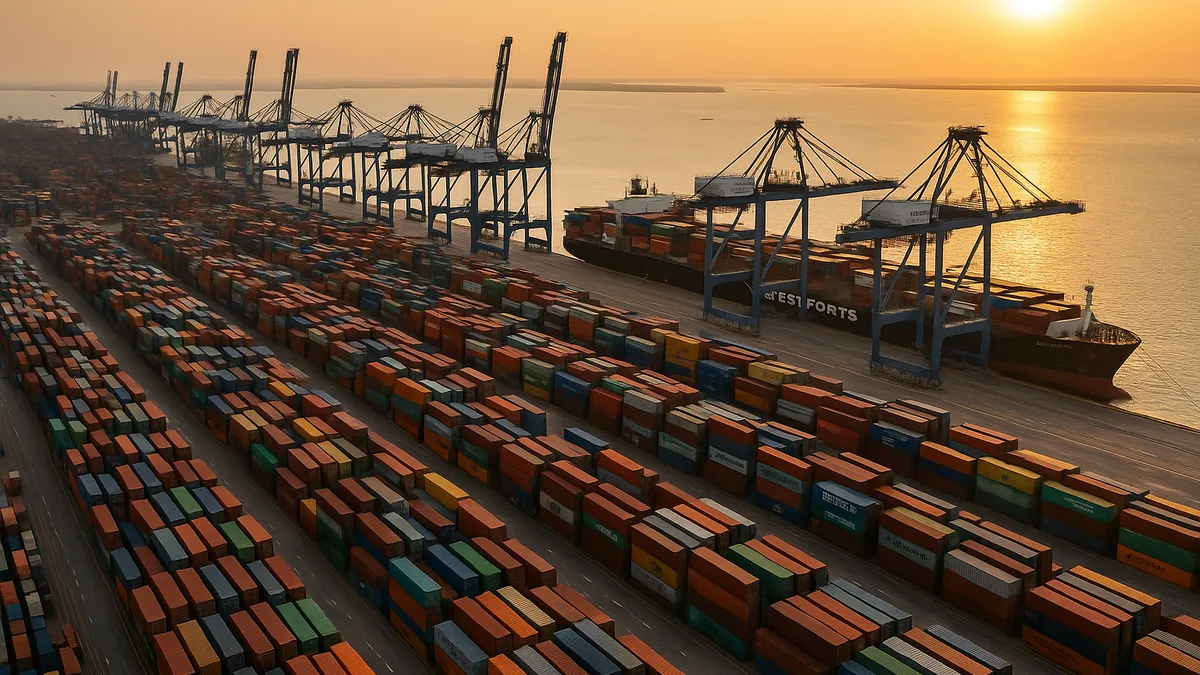
Port Klang is the heartbeat of Malaysian trade. As the nation's largest and busiest port, it handles over 90% of Malaysia's containerised cargo, connecting manufacturers and traders to more than 200 ports across 120 countries. Whether you are shipping rubber gloves to Europe, importing steel coils from China, or moving palm oil products to the Middle East, your goods almost certainly pass through Port Klang.
Yet for many businesses — especially those new to importing or exporting — Port Klang's operations can feel opaque. Which terminal should your cargo go to? How do you avoid demurrage charges? What advantages does the Free Trade Zone offer? This guide answers all of these questions and more.
Westport vs Northport: Understanding the Two Terminals
Port Klang is divided into two main terminals, each operated by a different company with distinct characteristics. Choosing the right terminal — or understanding why your shipping line has chosen it for you — can affect your costs, transit times, and operational efficiency.
| Feature | Westport | Northport |
|---|---|---|
| Operator | Westports Holdings Berhad | Northport (Malaysia) Bhd |
| Location | Pulau Indah | Port Klang mainland |
| Annual capacity | ~14 million TEUs | ~8 million TEUs |
| Primary focus | Transhipment + gateway | Gateway (import/export) |
| FTZ status | Yes — extensive FTZ | Yes — with FTZ facilities |
| Major shipping lines | CMA CGM, Evergreen, COSCO, MSC | Maersk, Hapag-Lloyd, ONE, Yang Ming |
| Conventional cargo | Limited | Extensive (break-bulk, bulk) |
Westport: The Transhipment Giant
Westport, located on Pulau Indah (formerly known as Pulau Lumut), is Southeast Asia's premier transhipment hub. Its deep-water berths can accommodate the world's largest container vessels, and its automated systems process containers with impressive speed. For gateway cargo — goods actually entering or leaving Malaysia — Westport offers modern facilities and generally faster truck turnaround times due to its purpose-built road infrastructure.
The terminal's location on an island means all haulage must cross the Sultan Abdul Halim Muadzam Shah Bridge, which can experience congestion during peak hours. Smart scheduling of truck arrivals can mitigate this.
Northport: The Gateway Workhorse
Northport sits on the mainland side of Port Klang and has historically been the primary gateway terminal for Malaysian imports and exports. It handles a broader mix of cargo types, including containers, break-bulk (non-containerised goods like steel, timber, and machinery), and liquid bulk.
For manufacturers importing raw materials in non-standard packaging or oversized equipment, Northport's conventional cargo facilities are often the better option. The terminal's proximity to Klang town and major highways provides convenient access to the Klang Valley industrial belt.
Container Handling Procedures and Timelines
Understanding the typical timeline from vessel arrival to cargo release helps you plan your operations and avoid unnecessary charges.
Import Timeline
- Vessel arrival and discharge (Day 0-1): Once the vessel berths, containers are discharged to the yard. Discharge of a typical vessel takes 12-36 hours depending on volume.
- Customs declaration submission (can be pre-arrival): Your broker can submit the import declaration before the vessel arrives. This is strongly recommended to speed up clearance.
- Customs processing (1-4 hours for green lane): Green-lane declarations are released almost immediately. Red-lane shipments requiring physical inspection may take 1-3 additional days.
- Duty payment and release order (same day): Once duties are paid through the customs system, the release order is generated digitally.
- Haulage collection (Day 1-3): Your haulier collects the container from the terminal and delivers it to your premises or warehouse.
Critical free storage periods
- Westport: 4 free days for import containers (from vessel discharge)
- Northport: 4 free days for import containers (from vessel discharge)
- Shipping line detention: Typically 5-7 free days (varies by carrier and contract)
- After free days expire, demurrage/detention charges accumulate rapidly — often RM150-400 per container per day
Export Timeline
For exports, the process works in reverse. Containers must arrive at the terminal within the shipping line's specified cut-off window — typically 24-48 hours before vessel departure for documentation cut-off and 12-24 hours for yard cut-off. Missing the cut-off means your cargo rolls to the next vessel, potentially adding a week or more to your delivery schedule.
Free Trade Zone (FTZ) Advantages
Both Westport and Northport operate within designated Free Trade Zones, which offer significant advantages for businesses that know how to use them. An FTZ is a legally defined area where goods can be landed, stored, handled, manufactured, or reconfigured — all without payment of customs duties.
Key FTZ Benefits
- Duty deferral: Goods stored in the FTZ do not attract import duties or sales tax until they are released into the Principal Customs Area (PCA). This is powerful for businesses that import in bulk but distribute over time.
- Re-export without duty: If goods enter the FTZ and are subsequently re-exported (to another country), no Malaysian duties are payable at all. This makes Port Klang an attractive regional distribution hub.
- Consolidation and deconsolidation: You can break down full container loads (FCL) into smaller shipments, or consolidate multiple smaller shipments into containers, all within the FTZ without triggering duty liability.
- Light manufacturing and assembly: Certain value-added activities — labelling, repackaging, quality inspection, kitting — can be performed in the FTZ under approved conditions.
Many manufacturers are unaware that they can use the FTZ as a buffer stock facility, importing raw materials in bulk when prices are favourable and drawing down stock as production requires — all without paying duty until the goods leave the zone.
Peak Season Challenges and How to Prepare
Port Klang experiences predictable congestion peaks throughout the year. Planning around these periods can save you significant money and stress.
Chinese New Year (January-February)
The weeks before CNY see a massive surge in imports as businesses stock up before the holiday shutdown. Chinese factories rush to complete orders, leading to a flood of containers arriving in Port Klang simultaneously. After CNY, there is a corresponding slump followed by a second surge as factories resume production.
Strategy: Ship early. Aim to have your goods arrive at least 2-3 weeks before CNY. Arrange haulage in advance — truck availability drops sharply as drivers take holiday leave.
Hari Raya Aidilfitri (dates vary)
The week before and after Hari Raya sees reduced port operations and haulage capacity. Many Malay truck drivers return to their hometowns, and customs operations run on reduced schedules.
Strategy: Clear your containers before the holiday period begins. Submit customs declarations early and ensure all documentation is complete to avoid delays during skeleton-staffed periods.
Year-End Peak (October-December)
Global shipping's peak season drives up freight rates and port congestion worldwide. Port Klang is no exception, with berthing delays, yard congestion, and strained haulage capacity common from October through December.
Strategy: Book freight early, confirm vessel space 4-6 weeks ahead, and build buffer time into your delivery commitments. Consider shipping FCL instead of LCL during this period, as LCL consolidation services experience longer delays.
Haulage and Last-Mile Delivery in Klang Valley
Getting your container from the port to your factory or warehouse is the final — and often most frustrating — leg of the journey. Port Klang's proximity to the Klang Valley industrial areas (Shah Alam, Subang, Petaling Jaya, Puchong) is an advantage, but road congestion can turn a 30-minute drive into a 2-hour ordeal.
Haulage Best Practices
- Schedule off-peak collections: Truck gate-ins before 8am or after 4pm typically experience shorter queues at both terminals.
- Use a haulier with terminal relationships: Experienced hauliers know which gates are faster, which yard blocks have better access, and how to navigate terminal procedures efficiently.
- Plan for return trips: If you are both importing and exporting, coordinate inbound and outbound container movements to minimise empty truck runs and reduce costs.
- Track your containers: Real-time tracking through your freight forwarder's system lets you prepare your receiving dock and unloading crew for the container's arrival.
Reducing Demurrage and Detention Charges
Demurrage (charges for containers sitting at the terminal beyond free days) and detention (charges for holding the shipping line's container beyond the allowed period) are among the most common — and most avoidable — cost overruns in Malaysian logistics.
Common Causes and Solutions
- Delayed customs clearance: Submit declarations pre-arrival and ensure all permits and exemptions are in order before the vessel docks.
- Incomplete documentation: Missing invoices, incorrect HS codes, or unsigned permits trigger holds that eat into your free days. Work with your broker to validate all documents before submission.
- Payment delays: Arrange for a running customs duty deposit or bank guarantee so that duty payment does not depend on individual invoice approvals.
- Haulage scheduling failures: Book your truck before the vessel arrives, not after clearance is obtained. Have a backup haulier relationship for peak periods.
- Warehouse readiness: Ensure your warehouse has space and labour available to receive the container. Containers returned late because the warehouse was not ready incur detention charges from the shipping line.
The cost of delay
- Terminal demurrage: RM100-300 per container per day after free period
- Shipping line detention: RM150-400 per container per day
- A single container delayed by 5 days beyond free time can cost RM1,250-3,500 in avoidable charges
- For businesses handling 20+ containers monthly, this can add up to tens of thousands of ringgit annually
How DNE's 25+ Years at Port Klang Benefits You
DNE Forwarding has operated from Port Klang since our founding. Our office is located in Klang, minutes from both terminals. This proximity is not just convenient — it is operationally critical.
- Terminal relationships: Our team works with Westport and Northport operations daily. We know the procedures, the people, and the fastest way to resolve issues when they arise.
- In-house haulage coordination: We manage haulage scheduling to align with your customs clearance timeline, minimising the gap between release and collection.
- Pre-arrival clearance: We submit your declarations and supporting documents before your vessel arrives, ensuring same-day or next-day clearance for green-lane shipments.
- FTZ expertise: We advise clients on when and how to use FTZ facilities to defer duties, consolidate shipments, or establish buffer stock arrangements.
- Demurrage prevention: Our operations team monitors container free-day deadlines and proactively coordinates clearance and collection to avoid overrun charges.
- Peak season planning: We help clients build seasonal logistics calendars, adjusting shipping schedules and stock levels to navigate congestion periods smoothly.
Port Klang is an incredibly capable port — but only if you know how to work with it, not against it. The difference between a smooth, cost-effective operation and a frustrating, expensive one often comes down to having the right logistics partner on the ground.