Key Takeaways
- As of July 2026, the Strait of Hormuz is effectively closed again. A 17 June US–Iran truce (the Islamabad Memorandum) partially reopened it from 18 June, but the deal unravelled in July — and on 15 July the IMO declared the strait too dangerous for commercial vessels to transit
- Freight rates have kept climbing: Asia–North Europe spot rates reached ~$5,800/FEU by mid-July 2026 — up roughly $3,000 in six weeks — with the Mediterranean at ~$7,200/FEU and transpacific lanes at $7,500–$9,000+/FEU
- The emergency conflict and war-risk surcharges announced in March remain in force — $3,000 per 40' container (CMA CGM, Hapag-Lloyd) plus war-risk surcharges of $1,500 per TEU on Gulf-linked lanes — on top of base rates that have kept rising
- Malaysia secured special diplomatic access in late March, which freed stranded Malaysian vessels in April — but under the July re-escalation the IMO's warning applies to all shipping, whatever the flag
- Even after the conflict ends, logistics disruption will persist for months as rerouted vessels, repositioned containers, and congested ports work through the backlog
On February 28, 2026, the United States and Israel launched military strikes on Iranian nuclear and military facilities. Within days, the global shipping industry was thrust into its most severe disruption since the COVID-19 pandemic. Iran retaliated by declaring the Strait of Hormuz closed to commercial traffic on March 4, backing up the declaration with attacks on vessels attempting transit. For Malaysian shippers moving cargo through Port Klang, the consequences have been immediate and far-reaching.
This article was first published in April 2026 and has been updated for the situation as of mid-July 2026 — after a June truce briefly reopened the strait, and then collapsed. It breaks down what has happened, how it affects your shipments, and what practical steps you can take to protect your supply chain.
What Happened: A Timeline of Escalation
The crisis escalated with alarming speed. On February 28, 2026, the US and Israel conducted coordinated strikes on Iranian targets. Iran's response was not limited to military retaliation against those countries directly. Instead, Iran targeted the most strategically valuable chokepoint in global trade: the Strait of Hormuz.
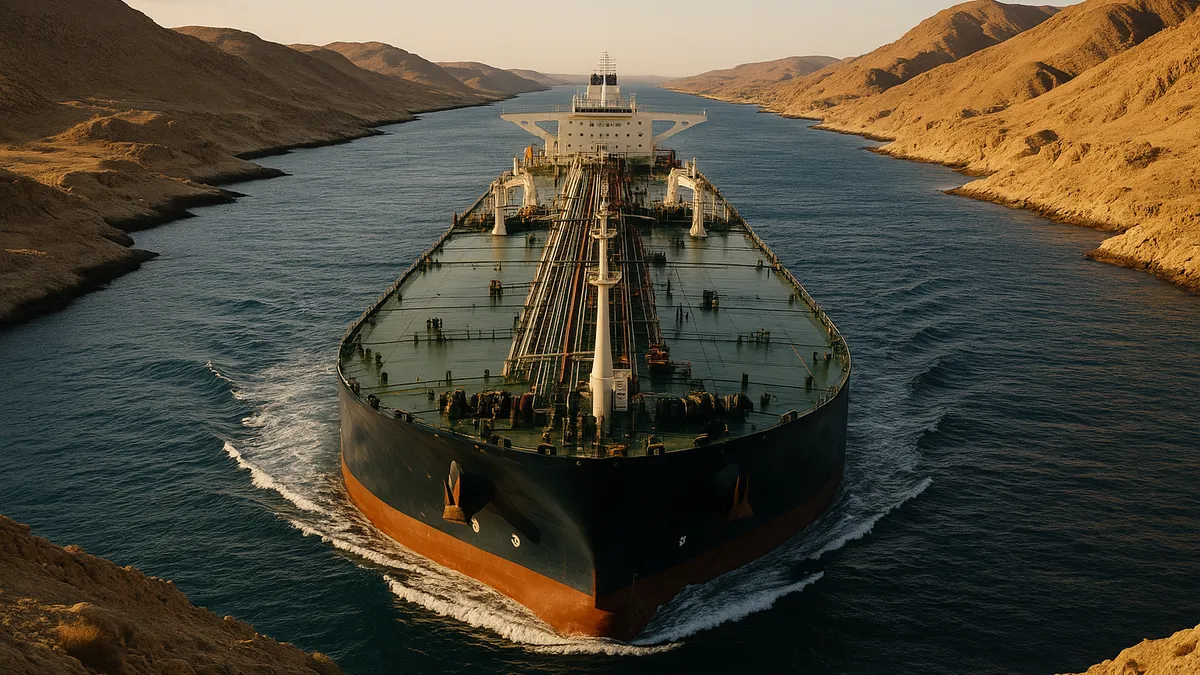
By March 4, 2026, Iran declared the strait closed. Iranian naval forces began intercepting commercial vessels attempting transit, with several ships attacked or seized in the first week. This was not an empty declaration. The Strait of Hormuz, a narrow passage between Iran and Oman at the mouth of the Persian Gulf, handles approximately 20% of the world's crude oil and liquefied natural gas (LNG) shipments. Closing it sent immediate shockwaves through global energy and freight markets.
The situation was compounded by Yemen's Houthi movement, which announced on February 28 that it would resume attacks on commercial ships in the Red Sea. This effectively closed two critical maritime chokepoints simultaneously, forcing vessels bound for Europe and the Mediterranean to abandon the Suez Canal route entirely and reroute via the Cape of Good Hope at the southern tip of Africa, adding two to three weeks to transit times.
The Oil Price Shock
Energy markets reacted immediately. Brent crude oil surpassed $100 per barrel on March 8 and continued climbing, reaching a peak of $126 per barrel as traders priced in the disruption to Gulf oil exports. For shipping, this matters beyond fuel costs. Higher bunker fuel prices feed directly into freight rates and surcharges. Every additional week a vessel spends rerouting via the Cape of Good Hope means additional fuel consumption, and at $126/barrel oil prices, those costs are substantial. The spike has since partially unwound — even after the July re-escalation, Brent was trading around $85 per barrel in mid-July 2026 — but bunker prices rose roughly 5% on the renewed closure, keeping fuel-driven pressure on freight rates.
The June Truce: A Partial Reopening
On 17 June 2026, the United States and Iran signed a memorandum of understanding — widely reported as the Islamabad Memorandum — pausing hostilities and setting a 60-day window to negotiate final terms. Under the deal, Iran agreed to let commercial vessels transit the strait, and traffic resumed on 18 June through two coordinated corridors: one through Iranian waters and a second through Omani waters under US oversight.
The reopening was real but thin. According to PortWatch data reported by Al Jazeera, only 513 ships transited the strait between 18 June and 5 July — about 28 vessels a day, against a pre-war average of roughly 100. And attacks on shipping never fully stopped: a container ship was struck southeast of Oman on 25 June, a laden crude tanker was hit by a drone on 27 June, and three more vessels were attacked on 6–7 July.
The July Unravelling
By 8 July, after renewed US strikes on Iran, the truce was declared over. On 12 July, Iran's Revolutionary Guard announced the strait closed once more, and a container ship transiting it was struck and heavily damaged. On 14 July, cruise missiles hit three tankers — including two UAE-owned crude carriers struck in the strait's southern lane inside Omani waters — killing one crew member and injuring eight. Confirmed transits fell by around half week-on-week in the days that followed, and several tankers turned back rather than attempt the passage.
On 15 July, IMO Secretary-General Arsenio Dominguez warned that the Strait of Hormuz is too dangerous for commercial vessels to transit — the strongest safety warning issued to the industry since the crisis began. As of mid-July 2026, the strait is, in practical terms, back to where it was before the ceasefire: closed to any vessel that does not obtain Iranian permission and stay inside Iran's designated northern channel.
How the Global Shipping Industry Has Responded
The world's largest container shipping lines moved quickly to protect their fleets and crews. Maersk, CMA CGM, and Hapag-Lloyd all suspended transit through both the Strait of Hormuz and the Red Sea, redirecting vessels on longer alternative routes.
The scale of the disruption is significant. Approximately 170 containerships with a combined capacity of around 450,000 TEU (1.4% of the global fleet) became trapped inside the strait when it closed in March. The June truce window allowed a portion of that tonnage to exit — but at only around 28 transits a day, far from all of it. The IMO briefly set up an evacuation programme for seafarers stuck on ships inside the Gulf, then scrapped it when attacks on vessels resumed in July. For shippers with goods on vessels still inside, the wait is once again indefinite.
Carrier Surcharges
Carriers responded in March 2026 with a wave of surcharges — and as of July 2026, they have not gone away:
| Carrier | Surcharge Type | 20' Container | 40' Container |
|---|---|---|---|
| CMA CGM | Emergency Conflict Surcharge | $2,000 | $3,000 |
| Hapag-Lloyd | War Risk Surcharge | $1,500/TEU | $3,000/TEU |
These March surcharges remain in force as of July 2026, and they sit on top of base freight rates that have kept climbing since. Carriers have also announced further mid-July increases of as much as $1,000/FEU on major east–west lanes, driven by peak-season demand as much as by the conflict. Surcharges are applied per container, regardless of cargo value, and are subject to change with little notice as the situation evolves.
The Impact on Malaysian Shipping and Port Klang
Malaysia occupies a unique position in this crisis. Geographically, Malaysian ports are not on the direct Hormuz or Red Sea routes. However, the interconnected nature of global shipping means that disruptions at any major chokepoint ripple through the entire network. For shippers operating out of Port Klang, the effects are being felt across multiple dimensions.
Freight Rate Increases
Rates out of Port Klang rose across the board in the first weeks of the crisis, driven by global capacity reductions and carrier surcharges. Here is the April 2026 snapshot we published at the time:
| Container Type | Pre-Crisis Rate | April 2026 Rate | Change |
|---|---|---|---|
| 20GP (General Purpose) | ~$414 | ~$506 | +23% |
| 40GP (General Purpose) | ~$702 | ~$858 | +15% |
| Air Freight (per kg) | ~$2.00/kg | ~$2.80/kg | +40% |
Those early-crisis numbers now look modest. Global spot rates kept climbing through the truce and its collapse — a compound of Hormuz risk, Cape of Good Hope rerouting, higher bunker costs and peak-season demand. Here is where the major lanes stood as of the 14 July 2026 Freightos (FBX) weekly update:
| Trade Lane | Spot Rate (mid-July 2026) | Movement |
|---|---|---|
| Asia – North Europe | ~$5,800/FEU | up ~$3,000/FEU in six weeks |
| Asia – Mediterranean | ~$7,200/FEU | up ~$3,000/FEU in six weeks |
| Asia – US West Coast | ~$7,500/FEU | up ~$4,000/FEU since May |
| Asia – US East Coast | $9,000+/FEU | up ~$4,000/FEU since May |
These figures represent averages, and specific trade lanes are seeing steeper increases. Air freight has not escaped either: the Freightos Air Index remains about 25% above pre-war levels as of July 2026, as shippers with time-sensitive cargo switch from disrupted sea routes to air, driving up demand on already capacity-constrained air cargo lanes.
Port Klang Congestion
Port Klang is experiencing increased congestion as rerouted vessels create scheduling irregularities. Ships that would normally transit the Suez Canal are now sailing via the Cape of Good Hope, altering their port call sequences and arrival windows. This means vessels are arriving at Westport and Northport in clusters rather than the regular, predictable intervals that terminal operations are designed for.
For shippers, this translates to longer berth waiting times, delayed container availability, and increased risk of demurrage charges as containers sit at the terminal beyond their free-day allowance.
Malaysia's Diplomatic Position
In late March 2026, Malaysian and Thai vessels were granted special access through the Strait of Hormuz following direct talks between Kuala Lumpur and Tehran — Prime Minister Anwar Ibrahim raised the issue personally with President Pezeshkian, and seven Malaysian vessels stranded in or near the strait were cleared to pass in early April. Iran's embassy framed it pointedly: the Islamic Republic "does not forget its friends".
That access was a genuine advantage in April. As of July 2026, it has to be read more cautiously. Iran's selective, permission-based transit model is still nominally how the strait operates — but the 14 July missile strikes hit tankers even in the southern lane inside Omani waters, and the IMO's 15 July warning applies to all commercial shipping, whatever the flag. In any case, the majority of containers moving through Port Klang are carried on vessels flagged by other nations and operated by global carriers, which are not transiting the strait at all. No shipper should build a routing plan around flag-based access right now.
The Ghost Fleet Factor
An often-overlooked dimension of this crisis is the presence of 81 Iranian oil tankers in a "ghost fleet" anchorage approximately 70 kilometres off Malaysia's coast. These vessels, used to circumvent sanctions on Iranian oil exports, represent a pre-existing maritime security concern that has taken on new significance in the context of the conflict. Their presence complicates navigation in Malaysian waters and adds another layer of operational risk for commercial vessels operating in the region.
Why the Disruption Will Outlast the Conflict
Even when the military situation stabilises and the Strait of Hormuz reopens to commercial traffic, the logistics disruption will persist for months. This is a critical point that many shippers underestimate — and the June truce proved it in miniature: even with the strait nominally open, traffic ran at barely a quarter of pre-war levels, and freight rates kept rising throughout.
"When the war is officially over... that does not mean the war is over for logistics." — Hapag-Lloyd
The reasons are structural:
- Container repositioning: Hundreds of thousands of containers are currently in the wrong place. Containers that should be in the Persian Gulf are stuck on the wrong side of the closure. Containers rerouted via Cape of Good Hope are weeks behind schedule. Rebalancing this global container inventory will take months.
- Vessel schedule recovery: Every vessel that has been rerouted is now operating on a disrupted schedule. Carriers will need to blank sailings, adjust rotations, and rebuild their network schedules. This process typically takes two to three months even after the triggering disruption is resolved.
- Port congestion cascades: When the strait durably reopens, the vessels still trapped inside the Gulf will begin moving simultaneously, creating a surge of arrivals at destination ports worldwide. This will trigger congestion events similar to what the industry experienced in 2021-2022 during the post-COVID recovery.
- Insurance and risk repricing: War risk insurance premiums for the Persian Gulf and Red Sea have already increased dramatically. Even after hostilities cease, insurers will maintain elevated premiums for an extended period, keeping surcharges in place.
Practical Steps for Malaysian Shippers
The current environment demands proactive supply chain management. Here are the actions we recommend for shippers operating through Port Klang:
1. Book Early and Confirm Space
With carriers reducing effective capacity through rerouting, available container slots are scarce. If you have shipments planned for the next three to six months, book as early as possible. Do not assume that space will be available at the last minute. Confirm your booking with your forwarding agent and request written space confirmation from the carrier.
2. Budget for Surcharges
The emergency conflict surcharges and war risk surcharges currently in effect should be factored into your landed cost calculations immediately. If you are quoting prices to customers for goods that will ship in the coming months, build these surcharges into your pricing. Absorbing $3,000 or more per 40' container in unexpected surcharges can eliminate your profit margin entirely.
Budget Impact Example
- A shipper moving 20 containers per month on Gulf-linked lanes still faces an additional $40,000-$60,000/month in conflict and war-risk surcharges alone
- On Asia–Europe, base spot rates rose roughly $3,000/FEU in the six weeks to mid-July 2026 — about $60,000/month more in base freight for that same 20-container shipper, before any surcharge
- Air freight alternatives, while faster, remain roughly 25% above pre-war price levels as of July 2026 — viable only for high-value or urgently needed cargo
3. Consider Alternative Routes and Modes
Depending on your cargo's origin and destination, alternative routing options may be available:
- Cape of Good Hope routing: Already the default for most carriers. Adds 10-14 days to Europe-bound shipments but avoids the conflict zone entirely.
- Trans-Pacific options: For cargo moving between Asia and the Americas, the Pacific route avoids the conflict zone entirely — but as of mid-July 2026 it is no longer a cheap refuge, with spot rates around $7,500/FEU to the US West Coast and above $9,000/FEU to the East Coast, up roughly $4,000 since May on rerouted capacity and peak-season demand. It still works for supply-chain diversification; budget accordingly.
- Rail alternatives: The China-Europe rail corridor (via Kazakhstan and Russia) remains operational for certain cargo types, offering a middle ground between sea and air on both cost and transit time.
- Air freight: With air cargo indices holding about 25% above pre-war levels as of July 2026, air freight is expensive but may be justified for high-value components, time-critical spare parts, or production-stopping materials. Calculate the cost of a production shutdown against the air freight premium.
4. Diversify Your Supplier Base
If your supply chain is heavily dependent on materials sourced from or routed through the Persian Gulf region, this crisis underscores the risk of geographic concentration. Begin identifying alternative suppliers in regions with more resilient shipping lanes. ASEAN-based suppliers, for example, can often be reached via intra-Asia shipping routes that are entirely unaffected by the Hormuz and Red Sea closures.
5. Strengthen Your Inventory Buffer
Just-in-time inventory practices, while efficient under normal conditions, leave no margin for disruption. If your business can sustain the working capital impact, consider building a two to four week safety stock buffer for critical materials. The cost of carrying additional inventory is almost always less than the cost of a production shutdown caused by delayed inputs.
6. Review Your Insurance Coverage
Ensure your cargo insurance covers war risk and conflict-related delays. Standard marine cargo policies may exclude losses arising from acts of war. Speak with your insurer or forwarding agent to confirm that your coverage is adequate for the current threat environment. This is especially important for cargo on vessels that may transit or be rerouted near conflict zones.
7. Work with an Experienced Forwarding Agent
In stable times, logistics can be managed with minimal active oversight. In a crisis, the difference between an experienced forwarding agent and a basic service provider becomes stark. You need a partner who monitors the situation daily, understands how carrier decisions affect your specific trade lanes, and can pivot your routing and booking strategy as conditions change.
How DNE Forwarding Helps You Through the Crisis
DNE Forwarding has operated through multiple shipping crises — from port strikes to pandemic-era disruptions to the Suez Canal blockage. Our approach during the Hormuz crisis is built on the same principles that have guided us through every disruption: proactive communication, practical solutions, and relentless attention to your cargo.
- Daily situation monitoring: Our operations team tracks carrier announcements, surcharge changes, and route modifications as they happen. You receive updates relevant to your shipments before they become problems.
- Carrier relationship leverage: As an ISO-certified forwarding agent with longstanding carrier relationships, we have direct communication channels with major lines including Maersk, CMA CGM, and Hapag-Lloyd. This means faster space confirmation and early visibility on schedule changes.
- Alternative routing advisory: We do not simply pass on carrier surcharges. We evaluate whether alternative routes, modes, or consolidation strategies can reduce your cost exposure. For some clients, a combination of sea freight via the Cape of Good Hope and selective air freight for critical components delivers the best balance of cost and reliability.
- Customs clearance speed: In congested port conditions, the speed of customs clearance directly affects your demurrage exposure. Our customs team at Port Klang pre-submits declarations and coordinates with Customs officers to minimise clearance time, keeping your containers moving out of the terminal as quickly as possible.
- Transparent cost communication: We provide detailed breakdowns of all surcharges and rate changes, with advance notice wherever possible. No surprises on your invoice.
- Warehousing flexibility: If rerouting or delays mean your cargo arrives before your facility can receive it, our warehousing capacity in the Klang Valley provides a buffer so you are not forced into expensive terminal storage.
Geopolitical disruptions are, by definition, beyond any shipper's control. But the impact on your business is not predetermined. The shippers who navigate this crisis most effectively will be those who act early, plan for extended disruption, and work with logistics partners who have the experience and infrastructure to adapt. The June truce showed the strait can reopen quickly — and the July unravelling showed how quickly that can reverse. The question is whether your supply chain can sustain the pressure through the swings, and whether you are positioned to recover quickly when a durable reopening finally comes.
Part of a guide: this article is part of our complete guide to Freight Forwarder Port Klang.