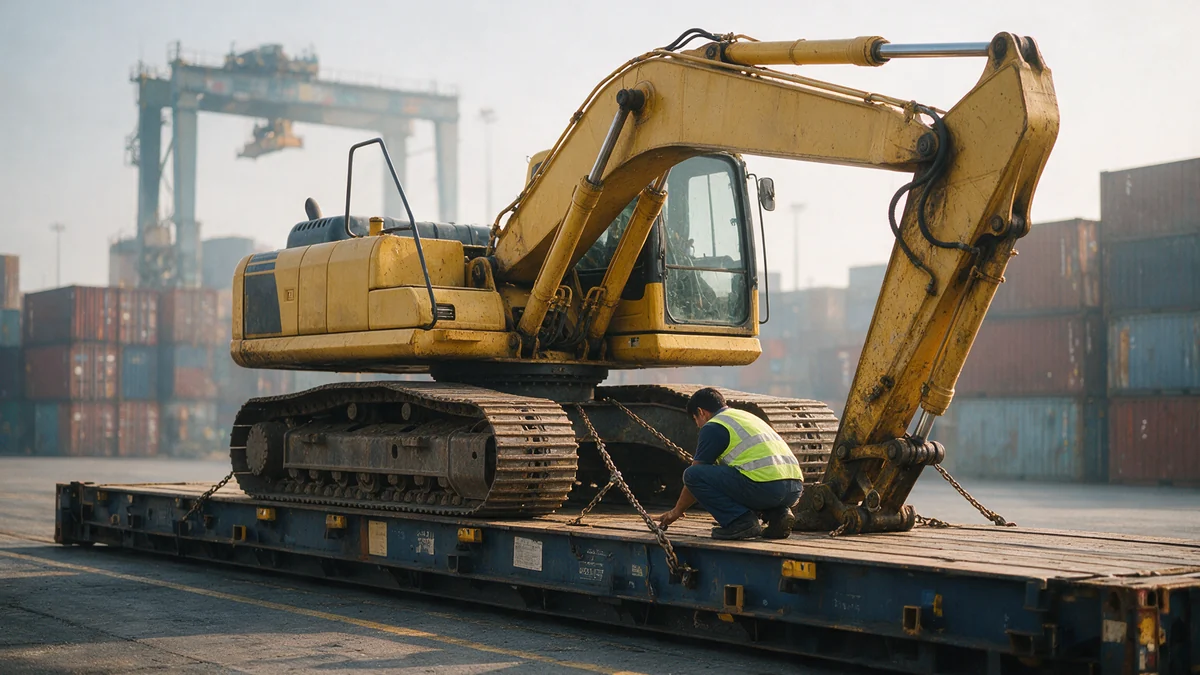
Yes, in most cases. Used machinery is not banned in Malaysia, but three things decide the route: the HS code, the machine's age, and what the machine does. Heavy machinery under HS headings 8426, 8701, 8704 and 8705 needs a MITI Approved Permit and must normally be under five years old. Lifting machinery needs DOSH design verification before it can legally operate.
A good second-hand press, excavator or crane costs a fraction of a new one. The awkward question — whether Malaysia will let it in — usually comes after it is paid for.
Last updated: 7 September 2026.
Key takeaways
- The HS code decides, not the word "machine". MITI's list runs on HS 8426, 8701, 8704 and 8705; outside them, most equipment needs no approval.
- Five years is the number to plan around — but MITI, DOSH and the Department of Environment each count it their own way.
- Older is not a dead end. MITI's temporary-import route allows it for genuine project work, if the machine leaves again afterwards.
- Lifting machinery has a second gate, nothing to do with trade — DOSH design verification, discussed before you buy.
- A used machine needs two documents a new one does not: a photograph of the chassis plate and an export certificate.
Which used machinery needs a MITI Approved Permit or another approval?
Five categories, in practice: cranes and lifting frames, used prime movers, heavy dump trucks, special-purpose vehicles such as crane lorries, and controlled electrical equipment. The controls run on tariff headings, not machine names, so finding the right HS code comes before you agree a price.
| What you are importing | Trigger | Who approves | Used-specific condition |
|---|---|---|---|
| Cranes other than tower cranes, lifting frames, straddle carriers | HS 8426 | MITI | Under five years old; some subheadings also need a non-objection letter from a local crane manufacturer |
| Used prime movers | HS 8701.21.0000 | MITI | Listed by name as a used item |
| Dump trucks, crawler carriers | HS 8704, above 35 tonnes gross vehicle weight | MITI | Under five years old |
| Special-purpose vehicles (crane lorries, drilling derricks, concrete mixers) | HS 8705, above 21 tonnes gross vehicle weight | MITI | Under five years old |
| Lifting machinery prescribed as plant requiring a Certificate of Fitness (forklifts and conveyors excluded) | Certificate of Fitness regime | DOSH | Used imports: portable lifting machinery only — not plant permanently fixed in place |
| Controlled electrical equipment | Energy Commission approval list | Suruhanjaya Tenaga | Certificate of Approval, then a SIRIM consignment test after clearance — same for new and used |
| Used electrical or electronic equipment (UEEE) | DOE used-equipment guidelines | Department of Environment | Five years or less from manufacture, plus a certificate of inspection proving it still works |
Sources: MITI's Approved Permit list and Mandatory Import Conditions.
General factory machinery — a lathe, a moulding machine, a packing line — usually sits outside all of this. The classification still matters; the approval does not.
Why does five years keep coming up?
Three agencies reached the same threshold separately, and satisfying one does not release you from the others. MITI states that under a normal import, "Imported machineries must be less than 5 years from the manufacturing date". DOSH allows design verification "only for used imported portable lifting machinery that was manufactured within five (5) years of the current year" — a calendar-year count, not MITI's rolling one.
The Department of Environment applies the same number to used electrical and electronic equipment: "five (5) years or less from the date of" manufacture.
Tower cranes are stricter still: they may only be imported brand new and made within one year of the date of manufacture, and used tower cranes are not allowed into Malaysia at all, not even temporarily.
What if the machine is older than five years?
MITI provides a temporary-import route. Under it, machinery "can be aged more than 5 years calculated from Date of Manufacture", on three conditions: the import is only for legitimate domestic work, the machine must be re-exported when the project ends or the licence expires, and the licence is renewed every six months.
That fits a contractor with a rig for one job, not a factory buying to keep — see the ATA Carnet and temporary import route. One exception: if the machine was exported from Malaysia in the first place, re-importation "only requires Customs original export (K2) form" and no Approved Permit — see the K1, K2, K8 and K9 forms.
Does used lifting machinery need DOSH design verification?
Yes, if the machine lifts a load under power — with a carve-out. The Occupational Safety and Health (Plant Requiring Certificate of Fitness) Regulations 2024, in force since 1 June 2024, do not apply to the machinery in their Third Schedule: forklifts, conveyors, dumpers, stackers and robotic arms among them. Everything else that lifts under power needs DOSH design verification before it is constructed, installed or operated — a conversation DOSH expects before the purchase:
"Discussion with the Design Approval Section, Industrial Safety Division, DOSH Headquarters must be conducted beforehand, before used lifting machinery is purchased and brought into Malaysia"
For a used import, DOSH design-verifies portable lifting machinery only — plant not permanently fixed to a structure and movable without being dismantled: mobile and crawler cranes, truck-mounted cranes, wheeled gantries. It names six it will not verify — tower crane, overhead travelling crane, goods hoist, passenger hoist, suspended access equipment, launching gantry — but they are only examples of non-portable plant: anything permanently fixed in place is out, named or not. A used overhead travelling crane can be bought, shipped and cleared through Port Klang, and still never earn a Certificate of Fitness. A machine DOSH will verify still needs the previous owner's usage records and an integrity report from an authorised inspecting body — evidence only the seller has.
What documents does a used machine need?
MITI's checklist is identical for new and second-hand equipment except in one line: where a new machine submits a manufacturing certificate, a used one submits a "Chassis Plate Picture and Export Certificate", showing the manufacturing year and the chassis number.
In practice that photograph is the whole file. A plate painted over, corroded or missing leaves the age unevidenced — and an unevidenced age does not qualify. Ask for it before the deposit, not after the machine is on a vessel.
In what order should you import a used machine?
Classify the machine, check its age against its own category, talk to DOSH if it lifts, have the chassis plate photographed while the machine is still the seller's, apply for the Approved Permit, and ship last. Four of those six steps happen before payment.
- Classify first. The HS code decides whether any of this applies.
- Check the age against the machine's own category, not a rule of thumb.
- If it lifts, talk to DOSH before you commit — and confirm it will design-verify that machine at all.
- Have the seller photograph the chassis plate and issue the export certificate while the machine is still theirs.
- Apply for the Approved Permit if one is required, with the certificate of origin and, for certain crane subheadings, the local-manufacturer letter.
- Then move it — declaration, clearance, delivery. Approval and cost are separate questions: import duty and SST are not MITI's to decide.
Where DNE fits
Getting the approval is the importer's job: DNE does not apply for import permits or advise on them. What we do is the movement around it — and the declaration has to match the approval you hold: same HS code, same chassis number, same year of manufacture as the chassis plate.
If the box lands before the approval issues, we prepare the declaration and hold it, then lodge the day your permit number exists. DNE Forwarding has cleared and hauled from Klang since 1999, more than 1,000 containers a month — see freight forwarding for machinery importers and our guide to Malaysian import permits.
Frequently asked questions
Can you import used machinery into Malaysia?
Yes, in most cases. Heavy machinery under HS headings 8426, 8701, 8704 and 8705 needs a MITI Approved Permit, and lifting machinery needs DOSH design verification. General factory machinery outside those headings usually needs only a correct declaration.
What is the age limit for importing used machinery into Malaysia?
Five years, but each agency counts it differently. MITI requires a normal heavy-machinery import to be less than five years from the manufacturing date; DOSH design-verifies used imported portable lifting machinery manufactured within five years of the current year; the Department of Environment applies the same test to used electrical and electronic equipment.
Can I import a used tower crane into Malaysia?
No. MITI's import conditions state that used tower cranes are not allowed for importation, even temporarily; only brand-new tower cranes made within one year of manufacture may be imported. DOSH separately will not design-verify a used imported tower crane.
Sources
- MITI — Approved Permit: Heavy Machinery
- MITI — Mandatory Import Conditions (PDF)
- DOSH — Design Verification of Lifting Machinery, application guide (PDF)
- Department of Environment — Transboundary Movement of Used Electrical and Electronic Equipment (PDF)
- Suruhanjaya Tenaga — Certificate of Approval (CoA)