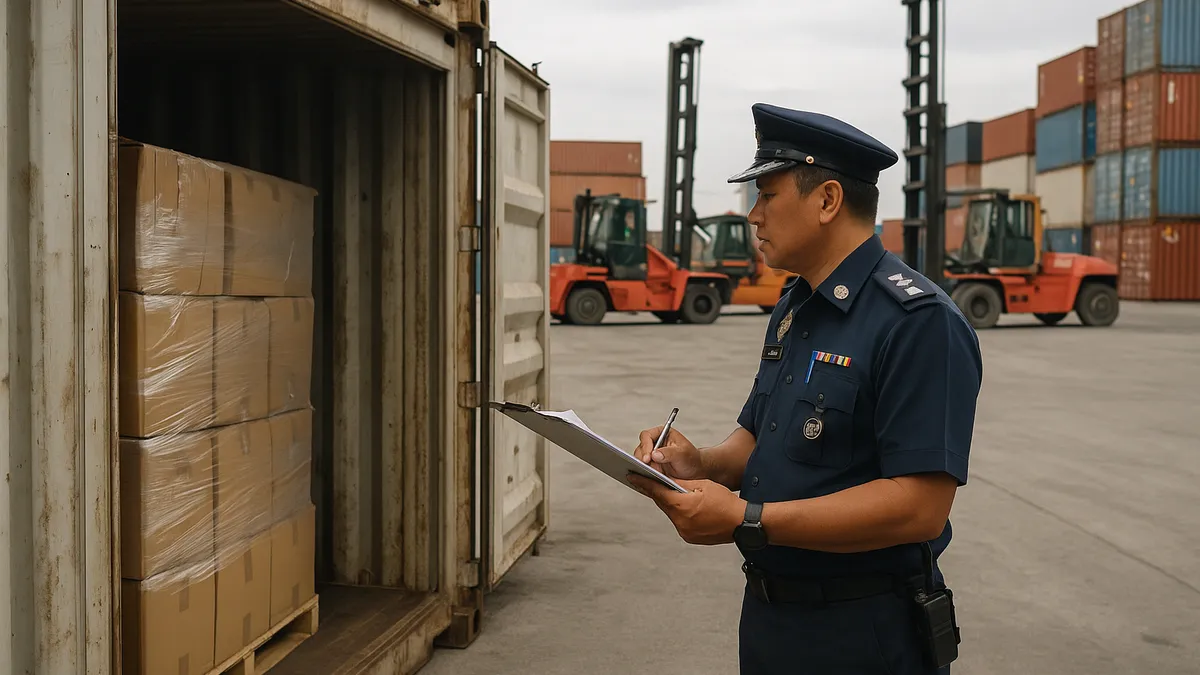
Importing goods into Malaysia can feel overwhelming, especially for first-time importers. Between the paperwork, regulatory requirements, tax calculations, and port procedures, customs clearance is the stage where shipments most often get stuck. Yet the process itself is logical and well-structured once you understand how each step connects to the next. This guide walks you through the entire customs clearance process in Malaysia, from document preparation to cargo release, so you can import with confidence and avoid costly mistakes.
What Is Customs Clearance in Malaysia?
Customs clearance is the formal process of declaring imported goods to the Royal Malaysian Customs Department (RMCD), known in Malay as Jabatan Kastam Diraja Malaysia (JKDM). It involves submitting the correct documentation, paying applicable duties and taxes, and obtaining official permission to bring goods into the country.
Every commercial shipment entering Malaysia must go through customs clearance, whether it arrives by sea through Port Klang's Westport or Northport terminals, by air through KLIA, or by land from Thailand or Singapore. The process is governed by the Customs Act 1967 and administered through RMCD's electronic declaration system.
The goal of customs clearance is threefold: to collect the correct amount of duty and tax revenue, to enforce import regulations and trade controls, and to facilitate the smooth flow of legitimate goods. When done properly, clearance can take as little as a few hours. When done poorly, your cargo can sit at the port for days or even weeks, racking up storage charges that erode your margins.
Step 1: Prepare Your Documents
Documentation is the foundation of successful customs clearance. Missing or inaccurate documents are the single most common cause of clearance delays. Before your goods arrive in Malaysia, you should have the following documents ready:
Essential Customs Documents
- Commercial Invoice: Issued by the seller, stating the value, description, quantity, and terms of sale (Incoterms). This is the primary document for determining customs value.
- Packing List: Details the contents of each package, including weight, dimensions, and item descriptions. Must match the commercial invoice exactly.
- Bill of Lading (B/L) or Airway Bill (AWB): The transport document issued by the shipping line or airline. For sea freight, the original B/L is required to take delivery of the cargo.
- Import Permit / Approved Permit (AP): Required for controlled items such as certain food products, pharmaceuticals, chemicals, and electronics. Must be obtained from the relevant regulatory agency before the goods arrive.
- Certificate of Origin (CO): Required to claim preferential duty rates under Free Trade Agreements (FTAs) such as ATIGA, RCEP, or CPTPP.
- Insurance Certificate: Proof of cargo insurance, used in CIF-based customs valuation.
All supporting documents are now submitted digitally through the Malaysia Customs Import-Export Document System (MyCIEDS). This platform, which became fully operational in 2025, allows importers and their forwarding agents to upload documents before the cargo arrives, enabling pre-clearance processing. Documents must meet specific formatting requirements set by MyCIEDS, so it is important to ensure your invoices and packing lists follow a clear, standardised format. For more on how MyCIEDS and other 2026 compliance changes affect your operations, see our detailed regulatory update.
Step 2: Classify Your Goods with the Correct HS Code
Every product imported into Malaysia must be assigned a Harmonised System (HS) code -- an internationally standardised numerical code that classifies traded products. Malaysia uses the ASEAN Harmonised Tariff Nomenclature (AHTN), which extends the standard 6-digit international HS code to 8 digits for greater specificity.
The HS code determines three critical things:
- Import duty rate: Different products attract different duty rates, ranging from 0% to over 30% depending on the category.
- Sales tax rate: Whether the item is taxed at 5%, 10%, or exempt under SST. With the July 2025 SST expansion, over 4,800 items were added to the SST net, making accurate classification more important than ever.
- Regulatory requirements: Certain HS codes trigger the need for import permits, SIRIM approvals, MAQIS inspections, or other agency clearances.
Getting the HS code wrong is not a minor administrative error. An incorrect HS code can result in underpayment or overpayment of duty, seizure of goods, penalty assessments of up to 50% of the duty shortfall, or even criminal prosecution for repeated non-compliance.
If you are unsure about the correct HS code for your product, you can request a Customs Ruling from RMCD, which provides a binding classification decision. Alternatively, your forwarding agent should be able to advise you based on their experience with similar goods.
Step 3: Submit the Customs Declaration (K1 Form)
The customs declaration is the formal notification to RMCD that goods are being imported. In Malaysia, import declarations are submitted electronically using the following forms:
- K1 (Borang Kastam No. 1): Used for goods imported for domestic consumption. This is the most common declaration form.
- K2 (Borang Kastam No. 2): Used for goods being exported from Malaysia.
- K3 (Borang Kastam No. 3): Used for goods being moved in transit through Malaysia or transferred between bonded warehouses.
- K9 (Borang Kastam No. 9): Used for goods being imported into or exported from Free Zones or Licensed Manufacturing Warehouses (LMWs).
For standard imports, the K1 form is submitted through RMCD's customs declaration system. The declaration includes details from your commercial invoice, packing list, and transport documents, along with the HS code classification and the calculated duty and tax amounts.
In practice, the K1 is almost always submitted by a licensed forwarding agent on behalf of the importer. The agent enters all the relevant information, attaches the supporting documents through MyCIEDS, and transmits the declaration electronically to RMCD.
Step 4: Duty and SST Calculation
Once the K1 declaration is submitted, RMCD assesses the duties and taxes owed. The calculation is based on the customs value of the goods, which is typically the CIF (Cost, Insurance, and Freight) value -- that is, the price of the goods plus shipping and insurance costs to the Malaysian port of entry.
The charges applied at import are:
- Import Duty: A percentage of the customs value, determined by the HS code. Rates vary widely -- many raw materials enter at 0%, while finished consumer goods may attract 20-30% duty.
- Sales Tax (SST): Calculated on the customs value plus import duty. The standard rate is 10% for most manufactured goods, with a reduced rate of 5% for certain essential or semi-processed goods. Some items remain exempt.
- Excise Duty: Applicable to specific categories such as vehicles, alcohol, tobacco, and sugar-sweetened beverages.
The formula for a standard import is: Customs Value (CIF) x Import Duty Rate = Import Duty, then (CIF + Import Duty) x Sales Tax Rate = Sales Tax. Your total tax liability is the sum of import duty and sales tax.
For manufacturers importing raw materials for further processing, Schedule C exemptions can eliminate or reduce the sales tax component. However, these exemptions must be applied for and approved before the cargo arrives in Malaysia. For strategies on minimising your total landed cost, see our guide on cutting logistics costs for Malaysian manufacturers.
Step 5: Customs Processing and Inspection
After the declaration is submitted and duties are assessed, RMCD processes the declaration through a risk-based selection system. Declarations are assigned one of three processing lanes:
- Green Lane: Low-risk shipments. The declaration is approved automatically, and the goods are released without physical inspection. This is the most common outcome for established importers with a good compliance history.
- Yellow Lane: Medium-risk shipments. A customs officer reviews the documentation but does not physically inspect the cargo. The officer may request additional documents or clarification before approving release.
- Red Lane: High-risk shipments. The cargo undergoes physical inspection at the port. A customs officer verifies that the actual goods match the declaration, checks quantities and descriptions, and may take samples for further analysis.
Factors that increase the likelihood of a Red Lane assignment include: first-time importers, shipments from high-risk countries, goods with a history of under-declaration, products that require special permits, and randomly selected shipments for audit purposes.
Step 6: Duty Payment and Cargo Release
Once the declaration is approved (whether automatically in the Green Lane or after review/inspection), the importer must pay the assessed duties and taxes. Payment is made electronically through the customs system, and upon confirmation of payment, RMCD issues a release order that authorises the port terminal or warehouse to release the cargo to the importer or their haulier.
At Port Klang, the release order is transmitted electronically to the terminal operator (Westport or Northport). The importer's appointed haulier then collects the container from the terminal yard and delivers it to the importer's premises or warehouse.
How Long Does Customs Clearance Take at Port Klang?
For well-prepared shipments with complete documentation and no issues, the timeline at Port Klang typically looks like this:
Typical Clearance Timeline
- Green Lane: 2-4 hours from declaration submission to release order, assuming duties are paid promptly.
- Yellow Lane: 1-2 working days, depending on the complexity of the document review and whether additional information is requested.
- Red Lane: 2-5 working days, depending on the inspection queue, availability of customs officers, and whether samples need to be tested.
These timelines assume that all documents are complete, the HS codes are correct, the required permits are in place, and duties are paid without delay. Any deficiency in documentation can add days or even weeks to the process. Containers sitting at the port beyond the free storage period (typically 3-5 days for import containers) incur storage charges and demurrage fees that can quickly become substantial.
The Role of a Forwarding Agent in Customs Clearance
While importers can theoretically clear their own goods through customs, the vast majority engage a licensed forwarding agent to handle the process. A forwarding agent is licensed by RMCD to submit customs declarations on behalf of importers and exporters. Here is what a good forwarding agent does:
- Document preparation and review: Checks all documents for accuracy and completeness before submission, catching errors that would cause delays.
- HS code classification: Advises on the correct tariff classification based on experience with similar products, ensuring accurate duty assessment.
- Declaration submission: Prepares and submits the K1 declaration through the customs system, including all supporting documents via MyCIEDS.
- Duty and tax management: Calculates expected duties, manages exemption applications (such as Schedule C), and processes payments on the importer's behalf.
- Regulatory compliance: Identifies which permits and approvals are needed, coordinates with agencies like MAQIS, SIRIM, and BOMBA, and ensures all requirements are met before the goods arrive.
- Issue resolution: When problems arise -- a customs query, a Red Lane inspection, or a discrepancy in the documentation -- the agent manages the resolution process directly with RMCD.
- Haulage coordination: Many forwarding agents, including DNE Forwarding, provide integrated haulage services, arranging container transport from the port to the importer's premises.
Common Mistakes Importers Make
In our 25 years of handling customs clearance at Port Klang, we have seen the same mistakes cause problems again and again. Here are the most costly ones to avoid:
1. Incorrect HS Code Classification
This is by far the most common and most expensive error. Importers who classify their own goods often choose a code that seems close but is technically wrong. The consequences range from overpaying duty (costing you money on every shipment) to underpaying duty (which triggers penalties, back-assessments, and potential prosecution when discovered during an audit).
2. Incomplete or Inconsistent Documents
Your commercial invoice says 500 cartons, but your packing list shows 480. The product description on the invoice does not match the Bill of Lading. The value on the invoice is stated in USD but the packing list shows a different figure. These inconsistencies trigger queries and delays, every single time.
3. Missing Import Permits
Many importers do not realise their products require an Approved Permit until the goods are already at the port. Certain food products require MAQIS permits. Electrical and electronic products may need SIRIM certification. Chemicals may need permits from the Department of Occupational Safety and Health (DOSH). By the time you apply for the permit after the cargo arrives, you are paying storage charges daily.
4. Undervaluing Goods
Declaring a lower value than the actual transaction price to reduce duty is illegal and is one of the offences RMCD pursues most aggressively. Customs officers compare declared values against reference databases, and significant discrepancies trigger investigation. Penalties include seizure of goods, fines of up to 20 times the duty shortfall, and criminal prosecution.
5. Late Schedule C Applications
Manufacturers who import raw materials for processing can claim sales tax exemption under Schedule C, but the application must be approved before the cargo arrives. Submitting the application after arrival means paying the full sales tax upfront and then going through a lengthy refund process -- if a refund is even possible.
Restricted and Prohibited Goods
Not everything can be imported freely into Malaysia. Goods fall into three categories:
- Freely importable: Most commercial goods can be imported without restrictions, subject to standard customs clearance and duty payment.
- Restricted (require an Approved Permit): Certain categories require prior approval from the relevant government agency. Common categories include: certain food and agricultural products (MAQIS), pharmaceuticals and medical devices (NPRA), chemicals and hazardous materials (DOSH/DOE), firearms and ammunition (PDRM), telecommunications equipment (MCMC), and motor vehicles (JPJ/MITI).
- Prohibited: Items that cannot be imported under any circumstances. This includes illegal drugs and precursors, counterfeit currency, obscene or seditious materials, and goods that infringe intellectual property rights.
The full list of restricted and prohibited items is maintained by RMCD and updated periodically. In 2026, expanded restrictions on single-use plastics and stricter e-waste classifications under the Basel Convention amendments are particularly relevant for manufacturers. Your forwarding agent should be your first point of contact to verify whether your goods require any special permits.
Tips for First-Time Importers
If you are importing into Malaysia for the first time, here is practical advice based on our experience handling thousands of first-time import shipments:
- Engage a forwarding agent before your first order ships. Do not wait until the goods are on the water. A good agent will review your product, confirm the correct HS code, identify any permits needed, and calculate your expected landed cost before you commit to the purchase.
- Get your documents right from the supplier. Provide your supplier with clear instructions on how to prepare the commercial invoice and packing list. Specify that descriptions must be detailed (not vague terms like "general merchandise" or "spare parts"), and that quantities, values, and weights must be consistent across all documents.
- Budget for the full landed cost. Your product cost is just the starting point. Add freight charges, insurance, import duty, sales tax, port charges, haulage, and forwarding agent fees to calculate the true landed cost. Many first-time importers are surprised by how much these charges add up to.
- Understand your Incoterms. The Incoterm on your purchase order (FOB, CIF, EXW, etc.) determines who is responsible for freight, insurance, and which charges are included in the customs value. Make sure you understand the implications before agreeing to terms.
- Apply for permits early. If your products require any permits or certifications, start the application process as early as possible. Some permits take weeks to process, and delays mean your goods sit at the port incurring charges.
- Keep records meticulously. RMCD can audit your imports going back six years. Maintain complete records of all invoices, declarations, duty receipts, permits, and correspondence related to every shipment.
- Start with a trial shipment. If possible, start with a smaller shipment to test the process before committing to large volumes. This lets you identify and resolve any issues at a lower financial risk.
How DNE Forwarding Simplifies Customs Clearance
At DNE Forwarding, customs clearance is our core business. For over 25 years, we have been clearing goods through Port Klang for manufacturers, traders, and SMEs across every industry. We are ISO certified and our team of licensed customs agents handles thousands of declarations every year.
Here is what sets us apart:
- End-to-end service: We handle customs clearance, haulage, warehousing, and freight forwarding under one roof. No handoffs between multiple vendors, no finger-pointing when issues arise.
- Full MyCIEDS integration: Our systems connect directly to the customs platform, enabling pre-arrival document submission and real-time tracking of your declaration status.
- Proactive compliance: We do not just process your declaration -- we review your documents, verify your HS codes, and flag any potential issues before they become problems.
- Regulatory expertise: We stay current with every regulatory change, from SST updates to new permit requirements. When rules change, we notify our clients proactively so there are no surprises.
- Cost transparency: We provide detailed breakdowns of all duties, taxes, and charges before your goods arrive, so you can plan your finances with confidence. We also advise on legitimate strategies to reduce your logistics costs.
- Port Klang specialists: As a Klang-based company, we have deep operational knowledge of both Westport and Northport terminals, including their procedures, contacts, and quirks. This local expertise translates to faster clearance and fewer delays.
Whether you are a first-time importer with a single container or a manufacturer moving dozens of shipments per month, we make customs clearance straightforward, compliant, and efficient. The process does not have to be complicated -- you just need the right partner.