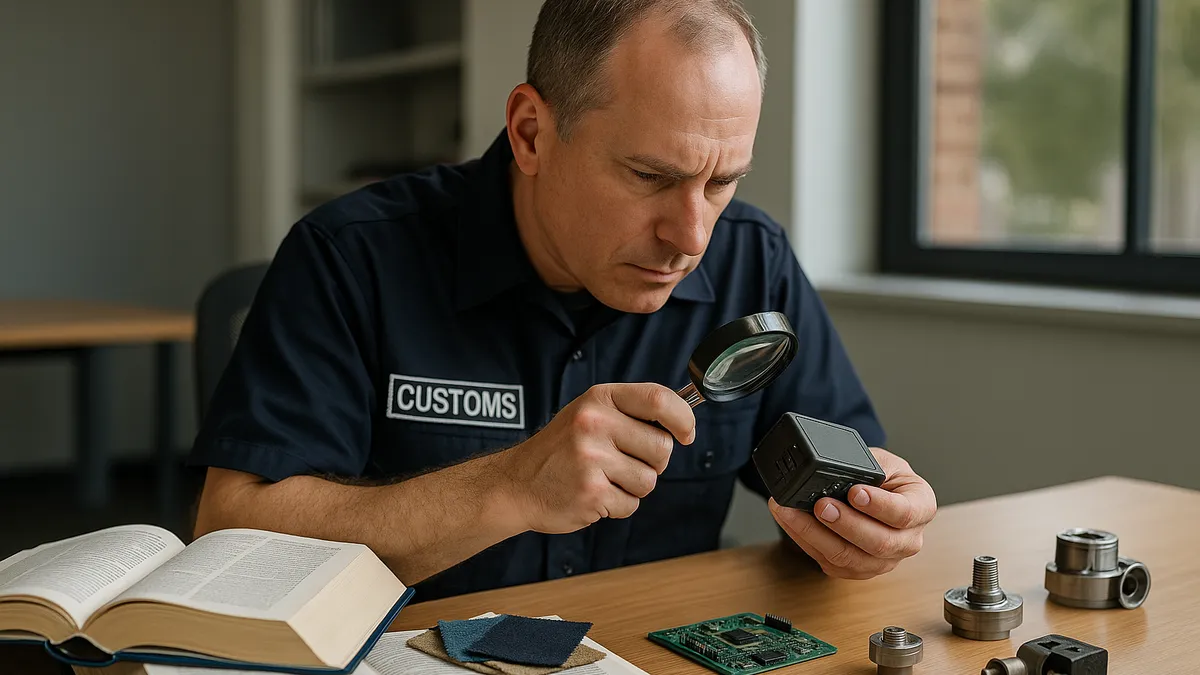
Every product that crosses Malaysia's borders needs a tariff classification code. Get it right, and your shipment clears customs smoothly with the correct duty and tax applied. Get it wrong, and you could face penalties, shipment delays, rejected FTA certificates, or thousands of ringgit in overpaid duties you will never recover. This guide walks you through exactly how HS codes work in Malaysia, how to find the right one for your product, and the costly mistakes that trip up even experienced importers.
What Is an HS Code?
The Harmonized System (HS) is a standardised numerical system for classifying traded goods. It was developed by the World Customs Organization (WCO) and is used by more than 200 countries and territories as the foundation for their customs tariff schedules. Over 98% of global trade is classified using the HS system.
The HS organises products into a logical hierarchy: it starts with broad categories (like "live animals" or "machinery") and narrows down to highly specific product descriptions. Every country in the world uses the same first six digits for a given product. Beyond those six digits, countries and regional blocs add their own subdivisions for more granular classification.
In Malaysia, the HS code is formally known as the tariff code and is administered by the Jabatan Kastam Diraja Malaysia (JKDM) — the Royal Malaysian Customs Department. Malaysia's tariff codes are 10 digits long, built on top of the international HS framework and the ASEAN Harmonized Tariff Nomenclature (AHTN).
How Malaysia's 10-Digit Tariff Code Is Structured
Understanding the structure of a Malaysian tariff code is essential for getting your classification right. Each segment of the 10-digit code serves a specific purpose:
Subheading
Specific
Here is what each segment means:
- Digits 1-2 (Chapter): The broadest product category. There are 97 chapters in total. For example, Chapter 85 covers electrical machinery and equipment, Chapter 15 covers animal or vegetable fats and oils.
- Digits 3-4 (Heading): A more specific grouping within the chapter. Heading 85.17 covers telephone sets and communication apparatus.
- Digits 5-6 (Subheading): The most specific level that is standardised internationally by the WCO. These six digits are identical worldwide — a laptop classified as 8471.30 in Malaysia will have the same first six digits in Japan, Germany, or Brazil.
- Digits 7-8 (ASEAN subheading): These are assigned under the ASEAN Harmonized Tariff Nomenclature (AHTN) and provide regional specificity shared across all 10 ASEAN member states. This level is critical for ASEAN free trade agreements like ATIGA.
- Digits 9-10 (Malaysia-specific): These final two digits are defined by JKDM to differentiate products at the national level for duty rates, licensing requirements, or statistical tracking purposes.
The first six digits of an HS code are universal. The last four digits differ between countries. This is why you cannot simply copy an HS code from a Chinese or American supplier's invoice and use it directly on your Malaysian customs declaration.
Why HS Codes Matter More Than You Think
Many importers treat HS code classification as a minor administrative task — just a number to fill in on the customs declaration form. This is a costly misconception. Your HS code directly determines:
What Your HS Code Controls
- Import duty rate: Different tariff codes carry different duty rates, ranging from 0% to over 30%. A single digit wrong can shift your duty liability by tens of thousands of ringgit.
- Sales and Service Tax (SST) rate: The SST rate — 5% or 10% for sales tax — is tied to the tariff code. Recent SST changes have expanded the scope significantly.
- Import permit requirements: Certain HS codes trigger mandatory Approved Permit (AP) requirements from agencies like MITI, MAQIS, SIRIM, or the Department of Environment. Classify your product under the wrong code and you may ship without a required permit — or waste time obtaining one you never needed.
- Free Trade Agreement (FTA) eligibility: Preferential duty rates under agreements like ATIGA, RCEP, CPTPP, or ACFTA are tied to specific tariff lines. If your HS code is wrong, your Certificate of Origin will be rejected.
- Trade statistics: Malaysia's import/export data is compiled from HS code declarations. Inaccurate codes distort national trade data and can trigger scrutiny from JKDM's risk management systems.
How to Find Your HS Code: A Step-by-Step Guide
The official tool for looking up Malaysian tariff codes is the JKDM HS Explorer, available at ezhs.customs.gov.my. This is the authoritative source maintained by the Royal Malaysian Customs Department. Here is how to use it:
Step 1: Go to the JKDM HS Explorer
Navigate to https://ezhs.customs.gov.my in your browser. The interface is straightforward — you will see a search bar and several filter options.
Step 2: Select the Correct Tariff Type
The HS Explorer offers multiple tariff schedules. For standard import duty rates, select PDK 2022 (Perintah Duti Kastam — Customs Duties Order). If you are checking preferential rates under a specific FTA, select the relevant agreement — for example, PDK (ATIGA) for ASEAN trade, ACFTA for ASEAN-China, AJCEP for ASEAN-Japan, or RCEP.
Step 3: Search by Description or Code
You can search in two ways:
- By item description: Type a simple keyword like "laptop", "palm oil", "rubber gloves", or "brake pad". The system will return a list of matching tariff lines.
- By HS code: If you already have a partial code (such as the first 4 or 6 digits from a supplier's invoice), enter it to browse the available subheadings.
Step 4: Review the Results Carefully
The search results will display the full 10-digit tariff code, the product description, the applicable duty rate, and any associated conditions or restrictions. Pay close attention to the wording of the product descriptions — customs classification is extremely precise, and similar-sounding descriptions can have very different duty rates.
Step 5: Cross-Reference With the Explanatory Notes
If you are uncertain which tariff line fits your product, consult the WCO Explanatory Notes for the relevant heading. These notes provide detailed guidance on what is included in and excluded from each heading. JKDM officers use these same notes when auditing classifications, so they are the definitive reference.
Other Useful References
- MATRADE Tariff Code Reference: matrade.gov.my offers a simplified tariff lookup for exporters.
- Your forwarding agent: An experienced freight forwarder like DNE Forwarding classifies hundreds of products monthly and can verify your code quickly.
- JKDM hotline: The Customs Call Centre (1-300-888-500) can assist with general classification enquiries.
Real-World Examples: Walking Through Common Products
Let us classify four products that are commonly imported or exported through Port Klang to show how the system works in practice:
| Product | HS Code | Classification Logic |
|---|---|---|
| Portable laptop computer | 8471.30 |
Chapter 84 (machinery) → Heading 84.71 (automatic data processing machines) → Subheading .30 (portable, weighing not more than 10 kg). Not classified under Chapter 85 (electrical apparatus) despite being electronic. |
| Crude palm oil | 1511.10 |
Chapter 15 (animal/vegetable fats) → Heading 15.11 (palm oil and fractions) → Subheading .10 (crude). Not .90, which covers refined palm oil. The distinction affects duty rates and export levy calculations. |
| Rubber examination gloves | 4015.19 |
Chapter 40 (rubber) → Heading 40.15 (articles of apparel of vulcanized rubber) → Subheading .19 (other gloves, excluding surgical). Medical surgical gloves fall under 4015.12 instead. |
| Car brake pads | 8708.30 |
Chapter 87 (vehicles) → Heading 87.08 (parts and accessories of motor vehicles) → Subheading .30 (brakes and parts thereof). Note: classified by function with the vehicle, not by material (even though they contain metal and friction material). |
Notice a pattern: classification follows the function and intended use of the product, not the material it is made from. A rubber glove goes under "articles of apparel" (Chapter 40), not under "articles of rubber" in a general sense. A laptop goes under "data processing machines" (Chapter 84), not "electrical apparatus" (Chapter 85). This principle catches many importers off guard.
Six Common HS Code Mistakes (and How to Avoid Them)
Mistake 1: Using a Foreign Supplier's HS Code Directly
Your Chinese or American supplier's HS code shares only the first six digits with Malaysia's tariff code. The last four digits — the ASEAN and Malaysia-specific portions — are different. Using a supplier's full 10-digit code on your Malaysian customs declaration is virtually guaranteed to be wrong. Always verify the full 10-digit Malaysian tariff code using the JKDM HS Explorer.
Mistake 2: Classifying by Material Instead of Function
The HS system has a set of General Interpretive Rules (GIRs) that govern classification. Rule 1 states that classification is determined by the terms of the headings and by the relevant section and chapter notes. In practice, this means a stainless steel kitchen sink goes under heading 73.24 (table, kitchen, or household articles of stainless steel) — not under a generic "stainless steel articles" heading. Function and intended use almost always take precedence over material composition.
Mistake 3: Composite Goods Confusion
Products made from multiple materials or serving multiple functions create classification headaches. A leather handbag with textile lining — does it go under leather goods or textile articles? The GIRs provide rules for composite goods: classify by the material or component that gives the product its essential character. For the handbag, the essential character is the leather exterior, so it is classified under Chapter 42 (leather articles), not Chapter 63 (textiles).
Mistake 4: Mixing Up Parts, Accessories, and Complete Goods
A complete air conditioning unit is classified differently from an air conditioning compressor sold separately. Parts and accessories often have their own specific headings (like 8708 for motor vehicle parts), but not always. Some parts are classified under the same heading as the complete machine, while others have separate headings. If your product is a component that is identifiable as being solely or principally for use with a particular machine, it typically follows that machine's classification — but there are important exceptions.
Mistake 5: Ignoring Section and Chapter Notes
The HS system includes detailed legal notes at the beginning of each section and chapter. These notes define what is included and excluded, and they override any general classification logic. For example, Chapter 39 (plastics) includes a note that excludes plastic articles that are more specifically described elsewhere. Ignoring these notes is one of the most common causes of misclassification.
Mistake 6: Not Updating for HS Revisions
The WCO updates the HS nomenclature on a five-year cycle. The current edition is HS 2022, and the next revision — HS 2027 — is already finalised and will take effect in January 2027. Each revision can renumber, split, merge, or delete subheadings. A code that was valid in 2021 may not exist in the current nomenclature. Always verify your codes against the latest edition in the JKDM HS Explorer.
When You Cannot Determine the Code: Advance Rulings
If you have a genuinely complex product that does not fit neatly into any tariff line, or if there is ambiguity between two possible classifications, you can apply for an advance ruling from JKDM.
Under Section 10A of the Customs Act 1967, any person may apply to the Director General of Customs for a customs ruling on the tariff classification of goods. Here is how the process works:
- Submit a formal application to JKDM's Tariff and Classification Branch. The application must include a detailed product description, technical specifications, photographs, composition details, and samples if requested.
- JKDM reviews the application and may request additional information or physical samples. The review process typically takes 30 to 90 days, depending on the complexity of the product.
- JKDM issues a binding ruling that specifies the correct tariff classification for your product. This ruling is legally binding on both the applicant and JKDM — meaning customs officers at the port must accept the classification in the ruling.
- The ruling remains valid until the facts change, the HS nomenclature is revised, or the ruling is revoked by the Director General. Under Section 10B, a ruling can be declared null and void if it was obtained through fraud or misrepresentation.
An advance ruling is not just useful for avoiding penalties — it is a strategic tool. If two possible classifications carry different duty rates, a ruling gives you certainty and protects you from retrospective reassessment by JKDM.
Advance rulings are particularly valuable for:
- New or innovative products that do not have a clear precedent
- Products that straddle two tariff headings
- High-value goods where the duty difference between two codes is significant
- Products subject to import permits under one classification but not another
The Cost of Getting It Wrong
HS code misclassification is not a minor paperwork issue. The consequences can be severe and come from multiple directions:
Underpayment of Duties
If JKDM determines that you classified your goods under a code with a lower duty rate than the correct code, they can recover the underpaid duties retrospectively. Under the Customs Act 1967, JKDM can go back up to six years to reassess your past declarations. On top of the duty shortfall, you face penalties that can be substantial — customs clearance errors compound quickly when applied across dozens or hundreds of past shipments. In serious cases, penalties and fines under Section 133 of the Customs Act can reach RM5,000 per offence, with potential imprisonment of up to seven years, or both.
Overpayment of Duties
Classifying your product under a code with a higher duty rate than necessary means you are voluntarily paying more tax than required. Unlike underpayment, JKDM will not proactively notify you of overpayment. The money is simply lost unless you identify the error and apply for a refund — which itself involves a bureaucratic process with no guaranteed timeline.
FTA Certificate of Origin Rejection
If you are claiming preferential duty rates under a Free Trade Agreement, the HS code on your Certificate of Origin must match the code on your customs declaration, which must match the code in the FTA's tariff schedule. Any mismatch — even in the ASEAN-specific digits — will result in the certificate being rejected and full MFN (Most Favoured Nation) duties being applied. For products with significant preferential margins, this can mean a duty rate increase from 0% to 20% or more.
Shipment Delays and Detentions
When JKDM's risk management system flags an HS code as inconsistent with the declared product description, your shipment may be held for physical examination. This means delays of days or even weeks while the classification is resolved, with storage charges accumulating at the port or warehouse throughout.
HS Code Changes: Staying Current
The HS system is not static. There are two types of changes importers and exporters need to track:
WCO Five-Year Revisions
The WCO revises the Harmonized System on a five-year cycle. The current edition is HS 2022, which took effect on 1 January 2022. The next edition, HS 2027, has been finalised by the WCO's HS Committee and is scheduled to take effect on 1 January 2027. Each revision introduces new subheadings, splits existing ones, merges underutilised codes, and updates descriptions to reflect modern products and technologies. The HS 2022 edition, for example, introduced new subheadings for drones, 3D printers, and electronic waste — products that did not exist when the previous edition was drafted.
Malaysia's National Amendments
Between WCO revisions, Malaysia can amend its own tariff schedule through Customs Duties Orders gazetted by the Ministry of Finance. These amendments can change duty rates, add or remove tariff lines at the 9th and 10th digit level, and modify the conditions attached to specific codes. JKDM publishes these amendments through official gazette notifications. Your forwarding agent should be monitoring these updates on your behalf.
Key Dates to Watch
- 1 January 2027: HS 2027 takes effect globally. All Malaysian tariff codes will be updated to align with the new nomenclature. Importers must transition to the new codes — old codes will no longer be accepted.
- Annual Budget: The Malaysian Budget (typically announced in October) often includes tariff rate changes effective from the following year.
- FTA implementation schedules: Preferential rates under FTAs often have annual reduction schedules, with rates decreasing incrementally toward 0% over agreed timeframes.
How DNE Forwarding Helps With HS Code Classification
At DNE Forwarding, tariff classification is not an afterthought — it is a core part of our customs clearance service. Our licensed customs agents review the HS code on every single shipment before it is declared. Here is what that means in practice:
- Tariff classification review: We cross-check every product against the current JKDM tariff schedule, not just rubber-stamping whatever code appears on the supplier's invoice. This catches misclassifications before they become penalties.
- Advance ruling support: For ambiguous or high-value products, we prepare and submit advance ruling applications to JKDM on your behalf, handling the technical documentation and follow-up so you do not have to navigate the process alone.
- Duty optimisation: We identify legitimate opportunities to reduce your duty exposure — whether through correct classification, applicable FTA preferential rates, or Schedule C exemptions for manufacturers. Every ringgit saved on duties goes directly to your bottom line.
- HS revision transition support: When the HS 2027 edition takes effect in January 2027, every tariff code in your product catalogue may need to be remapped. We will handle this transition for our clients to ensure zero disruption to your supply chain.
- Ongoing monitoring: Our team tracks JKDM gazette notifications, duty order amendments, and FTA schedule changes. When a change affects your products, we alert you proactively — not after your shipment is already at the port.
With over 25 years of experience handling customs clearance at Port Klang, we have classified thousands of products across every major industry — from electronics and automotive parts to food products and chemicals. That experience means faster, more accurate classification with fewer disputes and delays.