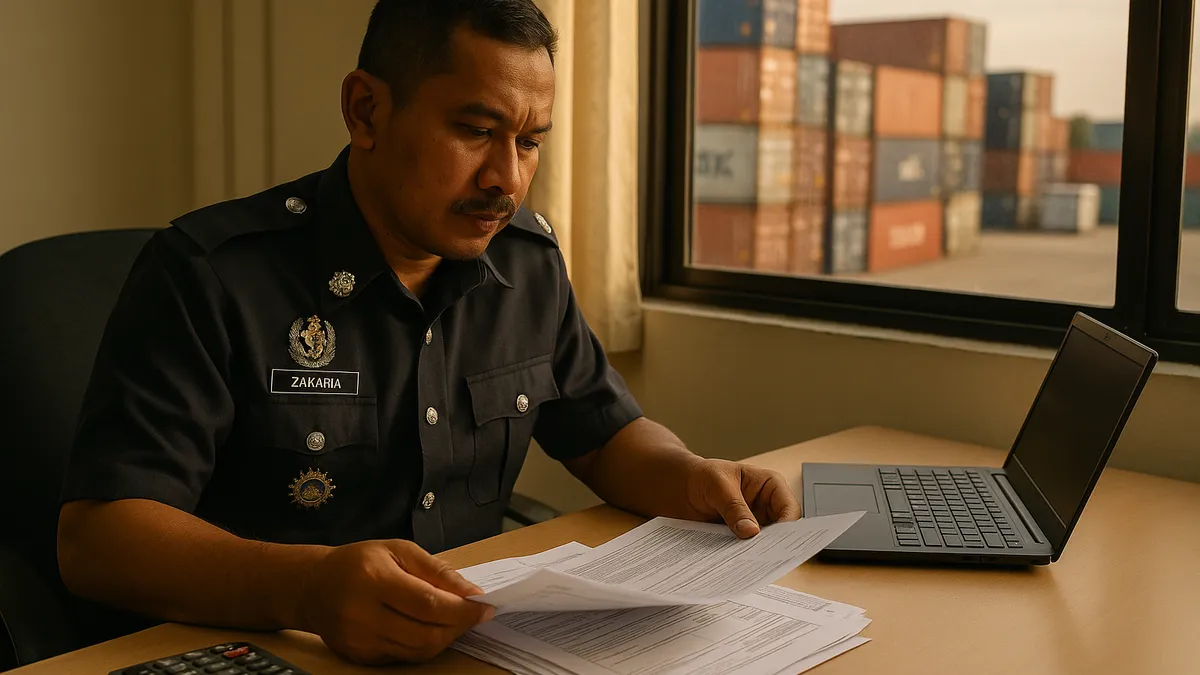
Malaysian trade compliance has entered a new era. Between sweeping SST changes, the digitisation of supporting documents through MyCIEDS, stricter environmental regulations, and updated prohibited items lists, the regulatory landscape for importers and exporters has undergone its most significant transformation in over a decade. If your business moves goods across Malaysian borders, this guide is essential reading.
MyCIEDS: The End of Paper-Based Supporting Documents
Launched in 2025 and now fully operational, the Malaysia Customs Import-Export Document System (MyCIEDS) digitises all supporting documents required for customs clearance. This platform eliminates the need to physically present documents such as invoices, packing lists, certificates of origin, and permits.
Under MyCIEDS, importers and exporters — or their authorised freight forwarders — upload supporting documents to a centralised repository linked to each declaration. Customs officers access these documents digitally during the clearance process. The key implications are:
- Pre-arrival document submission: Documents can be uploaded before cargo arrives, enabling faster clearance upon vessel discharge.
- Document standardisation: MyCIEDS enforces specific formatting and data requirements for each document type, reducing rejections caused by incomplete paperwork.
- Audit trail: Every document upload, amendment, and approval is logged with timestamps, creating a comprehensive compliance trail for both traders and regulators.
- Cross-agency integration: Permits from agencies like MAQIS (quarantine), SIRIM (standards), and DOE (environment) are now verified automatically against MyCIEDS records.
For manufacturers who handle dozens of shipments monthly, MyCIEDS is a genuine improvement — provided your internal documentation processes are robust enough to meet the platform's requirements. Incomplete or inconsistent documents will cause delays just as surely as before, except now the rejection is instantaneous rather than discovered at the port counter.
SST Expansion: The July 2025 Changes Still Affecting Trade
The Sales and Service Tax (SST) expansion that took effect from July 2025 continues to have major implications for importers and manufacturers in 2026. The scope of changes was enormous: over 4,800 goods and services were added to the SST net, representing the broadest expansion of indirect taxation since SST replaced GST in 2018.
Sales Tax Changes
Sales tax rates now operate on a tiered structure of 5% and 10%, depending on the category of goods. Previously exempt items — including certain building materials, basic hardware, and selected food processing inputs — are now subject to sales tax. The 10% rate applies to most manufactured goods, while essential or semi-processed goods attract the lower 5% rate.
Critically, any manufacturer with annual sales turnover exceeding RM500,000 is now required to register for sales tax. This threshold catches many small and medium manufacturers who previously flew under the radar. Non-registration carries penalties of up to RM30,000 or imprisonment, or both.
Service Tax Changes
Service tax has been restructured with rates between 6% and 8%. Logistics services, including certain warehousing and handling activities, now fall within the expanded service tax scope. This means that some costs in your supply chain that were previously tax-free now carry an additional 6-8% charge.
Schedule C Exemptions: Timing Is Everything
For manufacturers who import raw materials for further processing, the Schedule C exemption under the Sales Tax (Persons Exempted from Payment of Tax) Order remains a critical lifeline. However, the rules have tightened considerably:
Schedule C exemption must be approved BEFORE the cargo arrives in Malaysia. Retrospective applications are no longer accepted, and late applications will result in full duty and tax liability at the point of import.
This means manufacturers must plan their exemption applications weeks in advance of each shipment. Working with a customs broker who understands the application timeline is no longer optional — it is a business necessity.
E-Waste Import Ban: Basel Convention Amendments
Effective January 2025, Malaysia implemented new restrictions on e-waste imports following the Basel Convention amendments. These changes affect companies that import electronic components, refurbished equipment, or materials containing electronic waste residues.
The amendments establish stricter definitions of what constitutes e-waste versus reusable electronic equipment. Under the new rules:
- Imports of non-functional electronic equipment are classified as e-waste and require an Approved Permit (AP) from the Department of Environment (DOE)
- Refurbished electronics must be accompanied by functionality test certificates from accredited laboratories
- Mixed shipments containing any percentage of non-functional electronic items may be classified entirely as e-waste
- Penalties for non-compliance include seizure of goods, fines up to RM500,000, and potential criminal prosecution
Manufacturers who import electronic components for assembly or repair should review their supplier documentation carefully. Even components listed as "for refurbishment" may trigger scrutiny under the new classification rules.
New Prohibited and Restricted Items for 2026
JKDM has updated its list of prohibited and restricted items for 2026, reflecting both domestic policy changes and international treaty obligations. Key additions include:
- Single-use plastic products: Expanded restrictions on importation of certain single-use plastics, aligned with Malaysia's Roadmap Towards Zero Single-Use Plastics 2018-2030
- Controlled chemicals: Additional chemicals added to the restricted list under the Chemical Weapons Convention and Rotterdam Convention
- Timber products: Stricter documentation requirements for imported timber under the Malaysian Timber Legality Assurance System (MYTLAS)
- Counterfeit goods enforcement: Enhanced border enforcement measures for intellectual property rights, with Customs officers empowered to detain suspected counterfeit goods ex officio
Practical Tips for Staying Compliant in 2026
Given the scale of these changes, here are concrete steps every importer and exporter should take:
- Audit your HS codes: With the SST expansion, tariff classification directly affects your tax liability. A professional tariff review can identify misclassifications that may be costing you money — or exposing you to penalties. (See also: our guide to cutting logistics costs.)
- Apply for exemptions early: If you qualify for Schedule C or any other exemption, submit your application well before your cargo ships. Build a 3-4 week buffer into your planning.
- Digitise your documentation: If your invoices, packing lists, and certificates are still being managed in spreadsheets or paper files, migrate to a digital document management system that can interface with MyCIEDS requirements.
- Review your customs broker relationship: Not all brokers have adapted equally to the new systems. Ensure your broker is experienced with MyCIEDS and proactive about regulatory changes.
- Track regulatory updates: Subscribe to JKDM announcements and industry association bulletins. The regulatory environment is evolving rapidly, and changes can affect your next shipment.
How DNE Forwarding Helps You Navigate These Changes
At DNE Forwarding, we have been managing customs clearance at Port Klang for over 25 years. We have processed thousands of declarations and stay ahead of every regulatory change so our clients don't have to.
Here is what we bring to the table:
- Full MyCIEDS integration: Our systems connect directly to the platform, enabling pre-arrival document submission and real-time declaration tracking.
- SST advisory: We help manufacturers determine their sales tax registration obligations, identify applicable exemptions, and file Schedule C applications with the correct lead times.
- Tariff classification expertise: Our licensed customs agents review every shipment's HS codes to ensure accuracy, minimise duty exposure, and avoid penalties.
- Regulatory monitoring: We track JKDM circulars, gazette orders, and industry bulletins so you do not have to. When changes affect your trade, we alert you proactively.
- End-to-end service: Customs clearance is just one part of the equation. We handle haulage, warehousing, and documentation under one roof — reducing handoff errors and delays.
The 2026 customs landscape rewards preparation and penalises complacency. Whether you are a first-time importer or a seasoned manufacturer, having the right customs partner is more important now than ever.