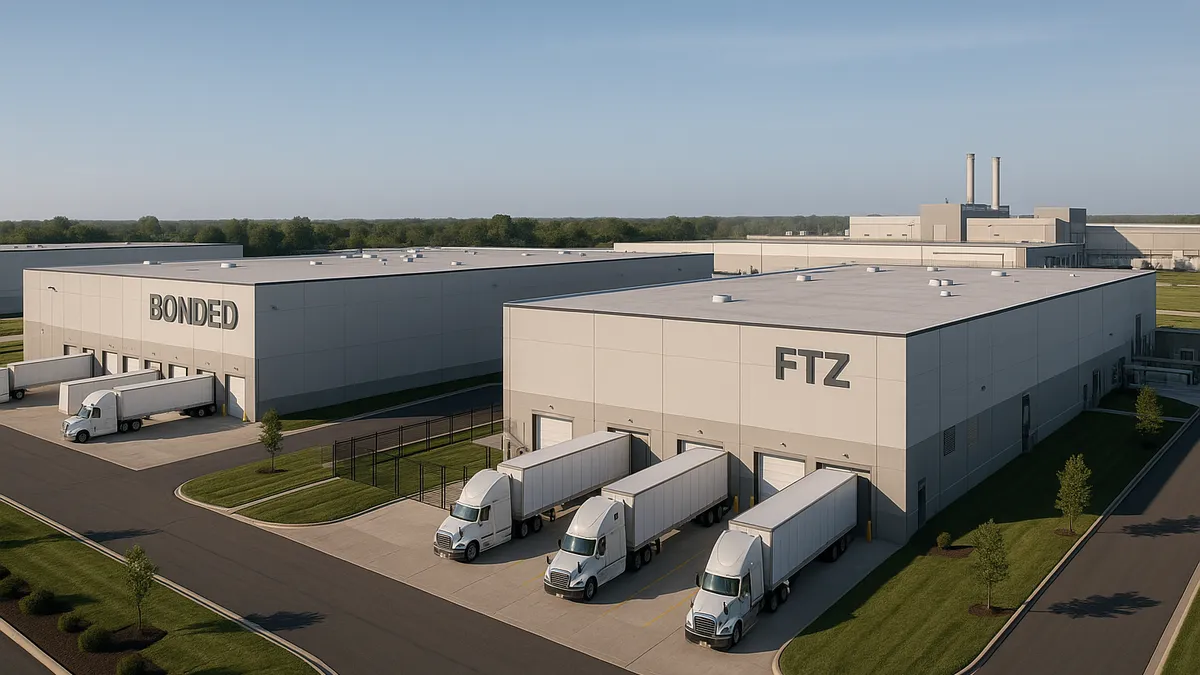
A Free Trade Zone (FTZ) is the closest thing in Malaysian logistics to a financial superpower. Goods stored in an FTZ have not legally entered Malaysia — no duty, no SST, no import-side compliance until the moment they leave the zone. For importers consolidating shipments, regional distributors, and businesses with seasonal demand, FTZ warehousing at Port Klang turns inventory cost into a manageable expense rather than a sunk one.
DNE operates FTZ and bonded warehouse capacity at Port Klang, with the documentation, customs liaison, and inventory systems to run a full regional hub from a single location. Goods can be stored indefinitely, repacked, re-labelled, kitted, and re-exported — all without ever paying Malaysian import duty if they don't enter domestic commerce.
What an FTZ actually does for you
The legal mechanism is simple. Free Trade Zones are physically inside Malaysia but legally outside the customs territory. Cargo enters the zone via the K8 transit declaration (no duty, no SST), is held in bond, and either:
- Re-exports directly out of the zone to a third country — never pays Malaysian duty. Common for regional distribution hubs serving Southeast Asia from a Malaysian base.
- Enters Malaysian commerce via a K1 declaration — duty and SST become payable only at the moment of entry, on the volume actually entering.
- Stays in storage indefinitely while you decide what to do with it — useful for seasonal stock, slow-moving inventory, and inventory positioning ahead of demand.
The result: instead of paying duty + SST on day one when your container lands, you pay only when (and only on the portion that) physically enters Malaysia.
FTZ vs bonded warehouse vs LMW
Malaysia has three duty-suspension mechanisms. Each has a different operational profile:
- Free Trade Zone (FTZ) — best for regional re-export hubs, consolidation, and large-scale duty deferral. Port Klang Free Zone (PKFZ) is Malaysia's flagship FTZ.
- Bonded Warehouse — best for individual importers wanting duty deferral on goods that will eventually enter Malaysia. More flexible location options.
- Licensed Manufacturing Warehouse (LMW) — for actual manufacturing with imported inputs. Inputs come in duty-free; finished goods either re-export or pay duty on entry.
See our detailed comparison in Bonded vs FTZ vs LMW: which is right for your business for a decision framework with cost analysis.
What we do inside the warehouse
How an FTZ shipment flows
1. Container arrival under K8 transit
When your container arrives at Port Klang, we file a K8 transit declaration to move the cargo into the FTZ. No duty, no SST, no domestic-commerce paperwork. Cargo physically moves from the terminal into the bonded warehouse zone.
2. Receiving and putaway
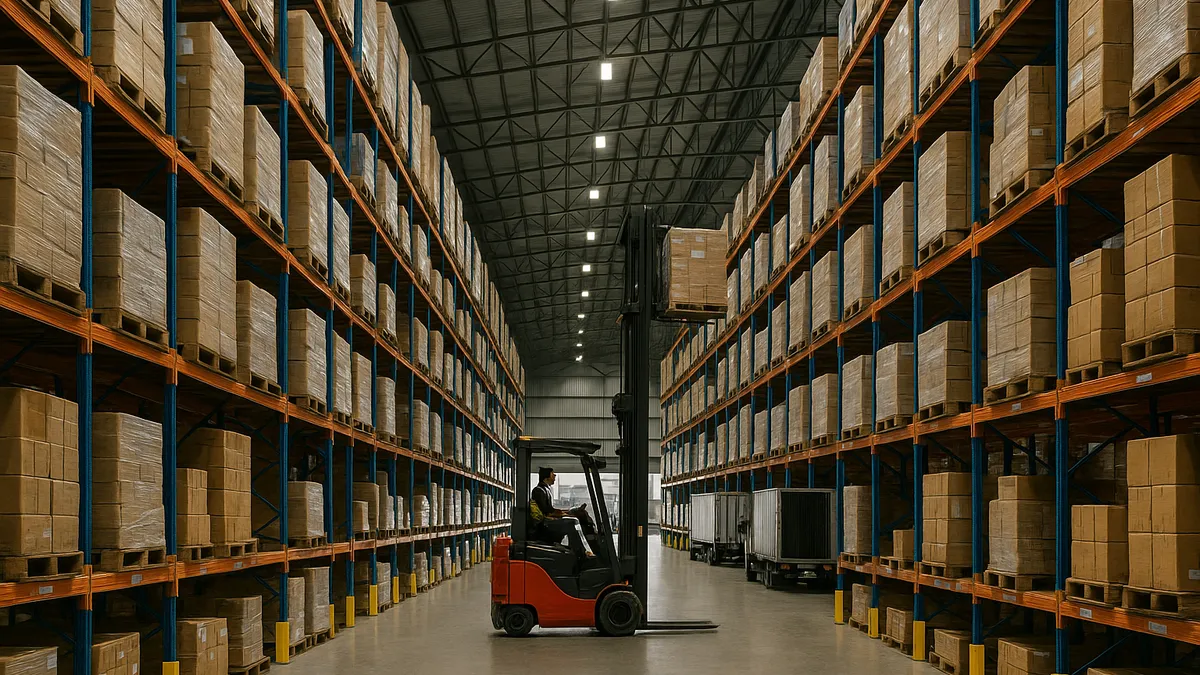
Goods are inspected, counted, and recorded against your inventory record. Damage or shortage is flagged within 24 hours. Putaway follows your slotting strategy — by SKU, by customer, by batch, by expiry date, however your operation is organised.
3. Value-added services as needed
While in the zone, goods can be repacked, re-labelled, kitted, or quality-inspected without triggering import duty. This is where most of the operational value lives — turning a 40ft container of bulk goods into 1,500 retail-ready cartons headed to five different ASEAN destinations.
4. Re-export or K1 entry
When goods leave the zone, two paths:
- Re-export — K8 export declaration, container loaded for shipment to the destination country. No Malaysian duty or SST ever paid.
- Domestic entry — K1 import declaration filed at the moment goods leave the zone, with duty + SST calculated on the actual volume entering.
5. Real-time inventory updates
Every movement — receipts, putaways, picks, packs, re-exports, K1 entries — is reflected in WizForwarding within minutes. You always have an audit-grade stock record.
When FTZ warehousing makes financial sense
What FTZ warehousing costs
Rates depend on storage type (racked vs bulk), volume, dwell time, and value-added services required. Typical pricing in 2026:
- Racked pallet storage: RM 8-15 per pallet per week, depending on volume committed.
- Bulk floor storage: RM 0.50-1.20 per square foot per week.
- Receiving / putaway: RM 8-15 per pallet, one-off.
- Pick-pack: RM 1-3 per order line depending on complexity.
- Re-labelling, kitting, repacking: quoted per scope of work.
For high-volume customers we offer tiered rate cards. The breakeven against paying upfront duty + SST is usually quick — often within the first 90 days of inventory holding for goods with 10%+ duty exposure.