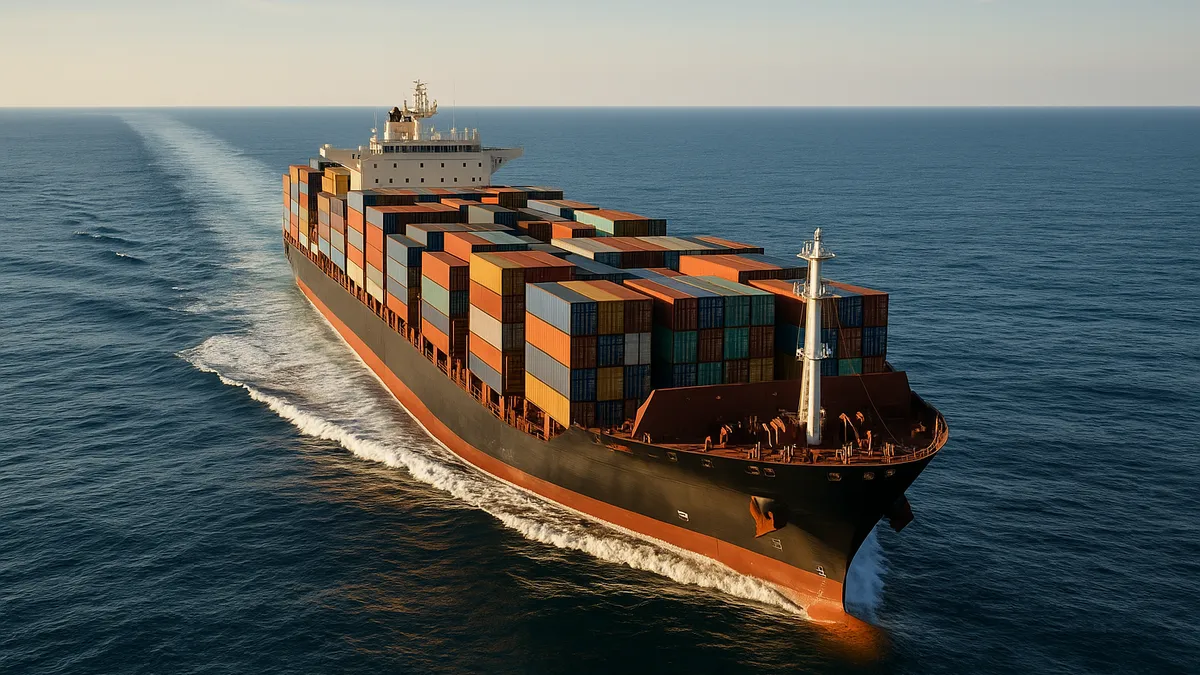
China is Malaysia's largest trading partner, and it has held that position for over 15 consecutive years. Bilateral trade between the two countries exceeded USD 100 billion annually in recent years, and millions of TEUs (twenty-foot equivalent units) move between Chinese ports and Port Klang every year. Whether you are importing consumer electronics, machinery, textiles, furniture, or raw materials, the China-to-Malaysia shipping lane is one of the busiest and most competitive in Southeast Asia.
Yet for all its volume, this trade route is also where Malaysian importers make some of their most expensive mistakes. From paying full Most Favoured Nation (MFN) duty rates when preferential rates are available, to misclassifying HS codes, to trusting a Chinese supplier's "all-in" quote that excludes half the actual costs — the pitfalls are numerous and costly.
This guide covers everything you need to know about shipping from China to Malaysia in 2026: the shipping options, realistic costs, transit times, documentation requirements, duty-saving strategies, and the mistakes that trip up even experienced importers.
Shipping Options: FCL vs LCL
The first decision when importing from China is whether to ship Full Container Load (FCL) or Less than Container Load (LCL). The choice affects your cost per unit, transit time, and risk profile. For a detailed comparison, see our FCL vs LCL guide.
FCL (Full Container Load)
You book an entire container — either a 20-footer (approximately 33 cubic metres) or a 40-footer (approximately 67 cubic metres). The container is sealed at the supplier's factory and opened only at your warehouse or at customs inspection. FCL is the standard choice when your cargo volume fills at least half a container, because the per-unit freight cost is significantly lower than LCL.
LCL (Less than Container Load)
Your cargo is consolidated with other shippers' goods into a shared container. LCL is cost-effective for smaller shipments (typically under 15 cubic metres), but it adds handling time at both ends — your goods must be loaded into a consolidation warehouse in China and then deconsolidated at Port Klang's CFS (Container Freight Station). This typically adds 3-5 days to your total transit time and introduces additional handling risk.
Major Chinese Ports Serving Malaysia
The port of origin in China significantly affects your transit time, freight rate, and service options. The six major Chinese ports for Malaysia-bound cargo are:
- Shanghai (Yangshan): China's busiest port and the world's largest container port. Serves manufacturers across the Yangtze River Delta, including Zhejiang and Jiangsu provinces. Excellent connectivity to Port Klang with multiple weekly sailings.
- Shenzhen (Yantian/Shekou): The primary port for Guangdong province — the heartland of Chinese manufacturing. Yantian handles massive volumes of electronics, machinery, and consumer goods. Closest major Chinese port to Malaysia, offering the shortest transit times.
- Ningbo-Zhoushan: China's second-busiest port, serving the manufacturing clusters of Zhejiang province, including Yiwu (small commodities), Wenzhou (shoes, eyewear), and Hangzhou (textiles, e-commerce).
- Guangzhou (Nansha): Serves the Pearl River Delta alongside Shenzhen, with particular strength in furniture, building materials, and automotive parts.
- Qingdao: The gateway port for Shandong province, major for machinery, chemicals, rubber products, and agricultural goods.
- Xiamen: Serves Fujian province, significant for stone products, tea, electronics, and footwear. Also a key port for trade with Taiwan.
Transit Times: China to Port Klang
Transit times vary based on the port of origin, the shipping line, and whether the service is direct or involves transshipment. Here are the realistic ranges for 2026:
Estimated Transit Times (Port to Port)
- Shenzhen/Guangzhou to Port Klang: 5-7 days (direct service)
- Xiamen to Port Klang: 5-8 days (direct or via Hong Kong)
- Shanghai to Port Klang: 7-10 days (direct service)
- Ningbo to Port Klang: 7-10 days (direct service)
- Qingdao to Port Klang: 9-12 days (often via Shanghai or Ningbo)
Important: These are port-to-port transit times. Your total lead time must also include 2-3 days for customs clearance at Port Klang, plus haulage to your warehouse. If your shipment requires inspection by SIRIM, MAQIS, or other agencies, add another 1-3 days. Realistically, plan for 10-18 days total from vessel departure in China to goods delivered at your warehouse in the Klang Valley or Shah Alam industrial areas.
Transshipment services — where the vessel stops at an intermediate port such as Singapore or Hong Kong — can add 2-5 days but are sometimes cheaper or the only option from smaller Chinese ports.
Current Freight Rates: China to Port Klang (2026)
Ocean freight rates from China to Southeast Asia have stabilised in early 2026 following the volatility of 2024-2025. However, rates remain above pre-pandemic levels and are subject to seasonal surges, particularly ahead of Chinese New Year and the Q4 peak season.
Indicative Ocean Freight Rates (April 2026)
- 20ft container (FCL): USD 800 - 1,400 depending on port of origin and carrier
- 40ft container (FCL): USD 1,400 - 2,400 depending on port of origin and carrier
- 40ft high-cube (FCL): USD 1,500 - 2,600
- LCL rate: USD 35 - 65 per cubic metre (minimum charge typically 1 CBM)
These are base ocean freight rates only. Your actual shipping cost will also include:
- Origin charges in China: Terminal handling, documentation, bill of lading fee — typically USD 150-300 per container
- Destination charges at Port Klang: Terminal handling charge (THC), documentation fee, delivery order — typically RM 800-1,500 per container
- Bunker Adjustment Factor (BAF): Fuel surcharge, varies by carrier
- Container Imbalance Surcharge (CIS): Some carriers apply this on the China-Malaysia route
Rates from Shenzhen and Guangzhou to Port Klang are generally at the lower end of these ranges due to shorter distance and high competition among carriers. Rates from Qingdao tend to be higher due to longer distance and potential transshipment.
Required Documents for China Imports
Having your documentation in order is the single most important factor in avoiding delays at Port Klang. For every import shipment from China, you will need:
- Commercial Invoice: Issued by your Chinese supplier, detailing the goods, quantities, unit prices, total value, and trade terms (Incoterms). Must match the purchase order and packing list exactly.
- Packing List: Detailed breakdown of each carton or package — contents, dimensions, gross and net weight. Customs uses this to verify the declared cargo against the physical shipment.
- Bill of Lading (B/L): Issued by the shipping line or freight forwarder. This is the title document for your cargo — you cannot collect your container without surrendering the original B/L (unless using telex release or sea waybill).
- Certificate of Origin (CO): Critical for duty savings. For China-Malaysia trade, the relevant certificates are:
- Form E — under ACFTA (ASEAN-China Free Trade Agreement), for preferential or zero duty rates
- RCEP Certificate of Origin — under the Regional Comprehensive Economic Partnership
- Insurance Certificate: If you are buying on CIF terms, the supplier provides this. If FOB, you arrange your own marine cargo insurance.
- Import Permits (if applicable): Certain goods require Approved Permits (AP) or licences from Malaysian regulatory agencies — SIRIM (electrical and electronic products), MAQIS (food, plants, animals), DOE (chemicals), BOMBA (flammable goods), and others.
Pro Tip: Always Request the CO Before Shipment
- Your Chinese supplier must apply for the Form E or RCEP CO from their local Chamber of Commerce or CCPIT (China Council for the Promotion of International Trade) before shipment
- It cannot be issued retrospectively in most cases — if the vessel sails without a CO, you may be stuck paying full MFN duty
- Specify in your purchase order that the supplier must provide a Form E or RCEP CO as a condition of payment
Customs Clearance at Port Klang
Once your container arrives at Port Klang — whether at Westport or Northport — the customs clearance process begins. Here is how it works:
K1 Declaration
All imports into Malaysia require a K1 customs declaration filed electronically through the uCustoms/DagangNet system. The declaration includes your HS code classification, declared value, duty and tax calculations, and all supporting document references. Your forwarding agent submits this on your behalf.
HS Code Classification
Every product must be classified under the correct Harmonised System (HS) code — a standardised numerical system used by customs authorities worldwide. The HS code determines your duty rate, whether you need any import permits, and whether your goods qualify for preferential rates under trade agreements. Getting the HS code wrong is one of the most common and costly mistakes importers make.
Duty and SST Calculation
Your total taxes at the border are calculated as follows:
- Import Duty: Applied to the CIF value (Cost + Insurance + Freight). Rates range from 0% to 60% depending on the HS code. With a valid Form E, many products attract 0% or reduced duty.
- Sales Tax (SST): Currently 5% or 10% depending on the product category, applied to the CIF value plus import duty. Some goods are exempt.
- Excise Duty: Only applies to specific categories like alcohol, tobacco, and vehicles.
For more on how duty and SST are calculated, see our import duty calculator guide.
Using ACFTA and RCEP for Duty Savings
This is where Malaysian importers leave the most money on the table. The ASEAN-China Free Trade Agreement (ACFTA) and the Regional Comprehensive Economic Partnership (RCEP) both provide preferential duty rates — often 0% — for goods originating from China. For a deeper exploration of trade agreements and how to use them, see our RCEP and FTA guide.
Form E (ACFTA)
The Form E is the Certificate of Origin used under ACFTA. It has been in effect since 2010, and for most product categories, the ACFTA tariff has been progressively reduced to 0%. This means that for a huge range of goods — electronics, machinery, textiles, plastics, chemicals, furniture — you should be paying zero import duty when importing from China, as long as you have a valid Form E.
Without a Form E, you pay the MFN (Most Favoured Nation) rate, which can range from 5% to 30% or even higher for some goods. On a 40ft container of electronics worth RM 500,000, the difference between 0% and 10% duty is RM 50,000. That is the cost of not requesting a certificate.
RCEP Certificate of Origin
RCEP came into effect in 2022 and provides an alternative pathway to preferential duty rates. RCEP certificates are useful in specific situations:
- When the product does not meet ACFTA rules of origin but qualifies under RCEP's more flexible cumulation rules
- When the goods contain components from multiple RCEP member countries (Japan, South Korea, Australia, New Zealand, ASEAN)
- When the supplier cannot obtain a Form E for administrative reasons
In practice, for most direct China-to-Malaysia imports, Form E under ACFTA provides equal or better duty rates than RCEP. However, RCEP is a valuable backup and is increasingly important for goods with complex, multi-country supply chains.
If you are unsure whether Form E or RCEP gives you a better rate, ask your forwarding agent to check both tariff schedules for your specific HS code. The difference can be significant.
Incoterms: What Works Best for China Imports
The Incoterm you agree with your Chinese supplier determines who is responsible for freight, insurance, and risk at each stage of the shipment. The most common Incoterms for China-to-Malaysia trade are:
- FOB (Free On Board) [Chinese port]: The most popular choice for experienced Malaysian importers. The supplier delivers goods to the port and loads them onto the vessel. From that point, the buyer controls the freight, insurance, and destination charges. FOB gives you full control over shipping costs and carrier selection — meaning you can negotiate better rates through your own forwarding agent.
- CIF (Cost, Insurance, Freight) [Port Klang]: The supplier arranges and pays for freight and insurance to Port Klang. This is simpler for first-time importers but typically more expensive, because the supplier marks up the freight and insurance. You also lose control over carrier choice and transit routing.
- EXW (Ex Works) [supplier's factory]: The buyer is responsible for everything from the factory door. This gives maximum control but requires you or your agent to handle Chinese domestic transport, export customs clearance in China, and all subsequent logistics. Not recommended unless you have a reliable agent in China.
Our recommendation: For most Malaysian importers buying from China, FOB [Chinese port] is the optimal Incoterm. It gives you control over the international leg of the shipment while keeping the Chinese export process with the supplier, who knows their local requirements best.
Common Mistakes When Importing from China
After handling thousands of China import shipments at Port Klang, here are the mistakes we see most often — and how to avoid them:
1. Not Requesting a Certificate of Origin
This is by far the most expensive mistake. Many importers either do not know about ACFTA preferential rates or forget to request the Form E from their supplier before shipment. The result: paying 10-30% MFN duty on goods that could have entered at 0%. On a container worth RM 200,000-500,000, this is a loss of RM 20,000-150,000 per shipment.
2. Wrong HS Code Classification
HS code misclassification can go both ways. Classifying too high means you overpay duty. Classifying too low is customs fraud and can result in penalties, goods seizure, and blacklisting by JKDM (Royal Malaysian Customs Department). Always have your HS codes verified by a qualified forwarding agent before your first shipment of any new product.
3. Undervaluation
Some importers are tempted to ask their Chinese supplier to issue an invoice with a lower value to reduce duty. This is illegal. Malaysian Customs has access to international price databases and benchmark values for common goods. If your declared value is significantly below market price, Customs will issue an uplift — recalculating duty based on their assessed value — and may impose penalties ranging from 10x to 25x the evaded duty amount.
4. Not Checking SIRIM and Permit Requirements
Certain product categories require SIRIM certification (electrical and electronic products, telecommunications equipment), MAQIS clearance (food, agricultural products), or other agency permits before they can be released from port. If you arrive at Port Klang without the required approvals, your goods sit in storage while you scramble to obtain them — incurring demurrage, detention, and storage charges that can exceed RM 500 per day for a single container.
5. Trusting the Supplier's "All-In" Price
Chinese suppliers often quote "all-in" prices that sound comprehensive but exclude critical costs. A typical "all-in" quote from a supplier covers the goods and perhaps FOB loading, but does not include: ocean freight, marine insurance, destination terminal charges, customs clearance fees, import duty, SST, haulage to your warehouse, or any permit costs. Always build your own landed cost calculation independently.
6. Ignoring Container Detention and Demurrage
You typically have 5-7 free days to collect your container from Port Klang after discharge. After that, demurrage charges from the port and detention charges from the shipping line apply — and they escalate quickly. Delays caused by documentation problems, permit issues, or slow customs clearance can turn a profitable shipment into a loss-making one.
Anti-Circumvention and Transshipment Risks
If your business involves importing Chinese-origin goods into Malaysia for re-export — particularly to the United States — you need to be aware of anti-circumvention scrutiny. US Customs and Border Protection (CBP) is actively investigating cases where Chinese goods are routed through Southeast Asian countries, including Malaysia, to avoid US tariffs on Chinese imports.
Simply importing goods from China, performing minimal processing or repackaging in Malaysia, and re-exporting them to the US with a "Made in Malaysia" label does not change their country of origin for customs purposes. CBP uses sophisticated data analytics to identify these transshipment patterns, and the penalties include retroactive duty collection, fines, and potential criminal prosecution.
For more on how US tariffs are affecting supply chains through Malaysia, see our tariff storm analysis and China Plus One strategy guide.
If you are setting up legitimate manufacturing in Malaysia using Chinese inputs, ensure your operations involve substantial transformation that genuinely changes the HS code and character of the goods. Document your manufacturing process thoroughly.
Total Cost Example: 40ft Container of Electronics from Shenzhen to Shah Alam
To make the costs concrete, here is a realistic itemised breakdown for importing a 40ft container of consumer electronics (HS code chapter 85) from Shenzhen (Yantian) to a warehouse in Shah Alam, Selangor.
| Cost Component | Amount (Est.) |
|---|---|
| Goods value (FOB Shenzhen) | RM 400,000 |
| Ocean freight (40ft FCL, Yantian to Port Klang) | RM 7,500 |
| Marine cargo insurance (0.3% of CIF value) | RM 1,225 |
| Origin charges (THC, documentation, B/L — China side) | RM 1,100 |
| Destination THC and port charges (Port Klang) | RM 1,200 |
| Customs clearance and forwarding fee | RM 450 |
| Import duty (0% with Form E under ACFTA) | RM 0 |
| Sales tax (SST at 10% on CIF value) | RM 40,873 |
| Haulage (Port Klang to Shah Alam warehouse) | RM 800 |
| Unstuffing / unloading at warehouse | RM 350 |
| Total Landed Cost | RM 453,498 |
Without the Form E, import duty at a typical MFN rate of 15-20% on the CIF value would add approximately RM 61,000 - RM 81,750 to this total. The Form E alone saves more than the entire freight cost many times over.
Note: SST is calculated on the CIF value (goods + freight + insurance = approximately RM 408,725). Actual amounts will vary based on specific HS codes, exchange rates, and carrier rates at time of shipment.
How DNE Forwarding Handles Your China Imports
At DNE Forwarding, China-to-Port Klang is one of our highest-volume trade lanes. We have been handling China imports for over 25 years, and our team manages the entire process from carrier booking to warehouse delivery.
Here is what we bring to the table:
- Direct carrier relationships: We work with major shipping lines on the China-Malaysia route, including COSCO, Evergreen, ONE, Yang Ming, and PIL. Our volume-based rates are consistently competitive, and we can advise on the best carrier and routing for your specific port of origin.
- ACFTA and RCEP expertise: We verify your Form E or RCEP CO before your cargo arrives, flag any issues with your supplier's documentation, and ensure you claim every preferential rate you are entitled to. We have prevented countless clients from overpaying duty due to missing or defective certificates.
- Customs clearance at Port Klang: Our licensed customs agents file your K1 declaration, handle HS code classification, manage permit requirements (SIRIM, MAQIS, and others), and coordinate with JKDM to ensure smooth release. We aim for same-day clearance on straightforward shipments.
- Haulage and delivery: Our own fleet and network of trusted hauliers deliver your container from Port Klang to anywhere in the Klang Valley, Shah Alam, Subang, Puchong, and beyond. We coordinate delivery timing with your warehouse to avoid waiting charges.
- End-to-end visibility: From the moment your container leaves the Chinese port, we track it and keep you updated. You know exactly when your goods will arrive and when they will be delivered to your warehouse.
Whether you are importing your first container from China or your thousandth, having the right forwarding agent at Port Klang makes the difference between a smooth, cost-efficient import and a costly, stressful ordeal. We handle the complexity so you can focus on your business.